
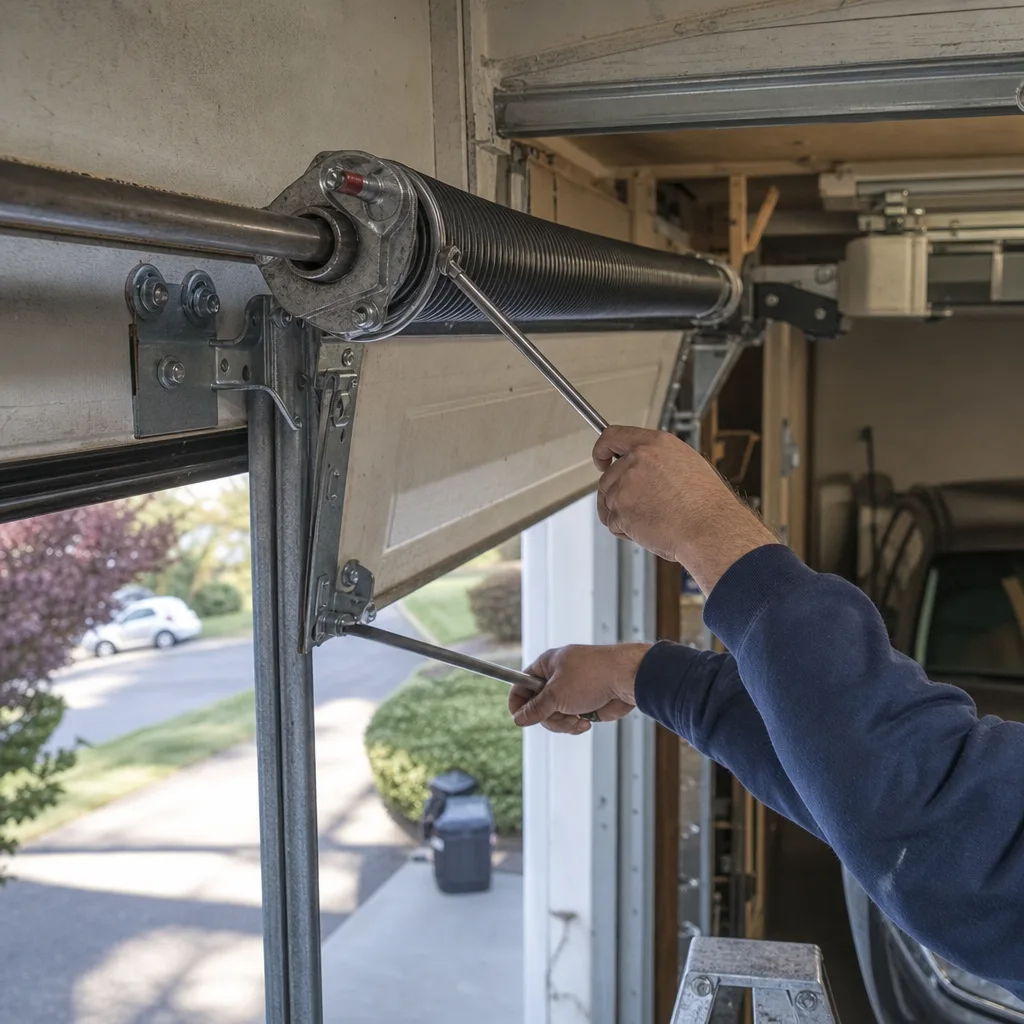
Last updated November 21, 2026
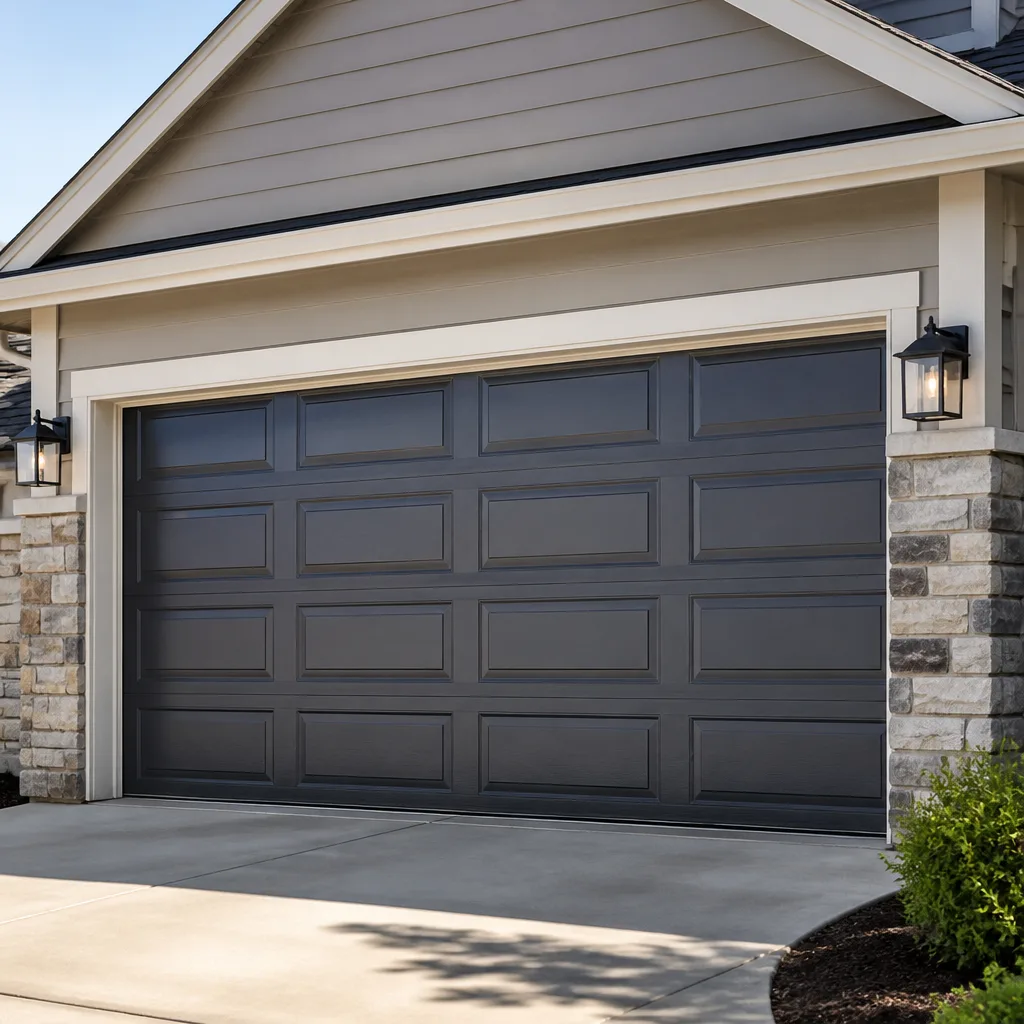 Raised-panel steel
 Carriage house
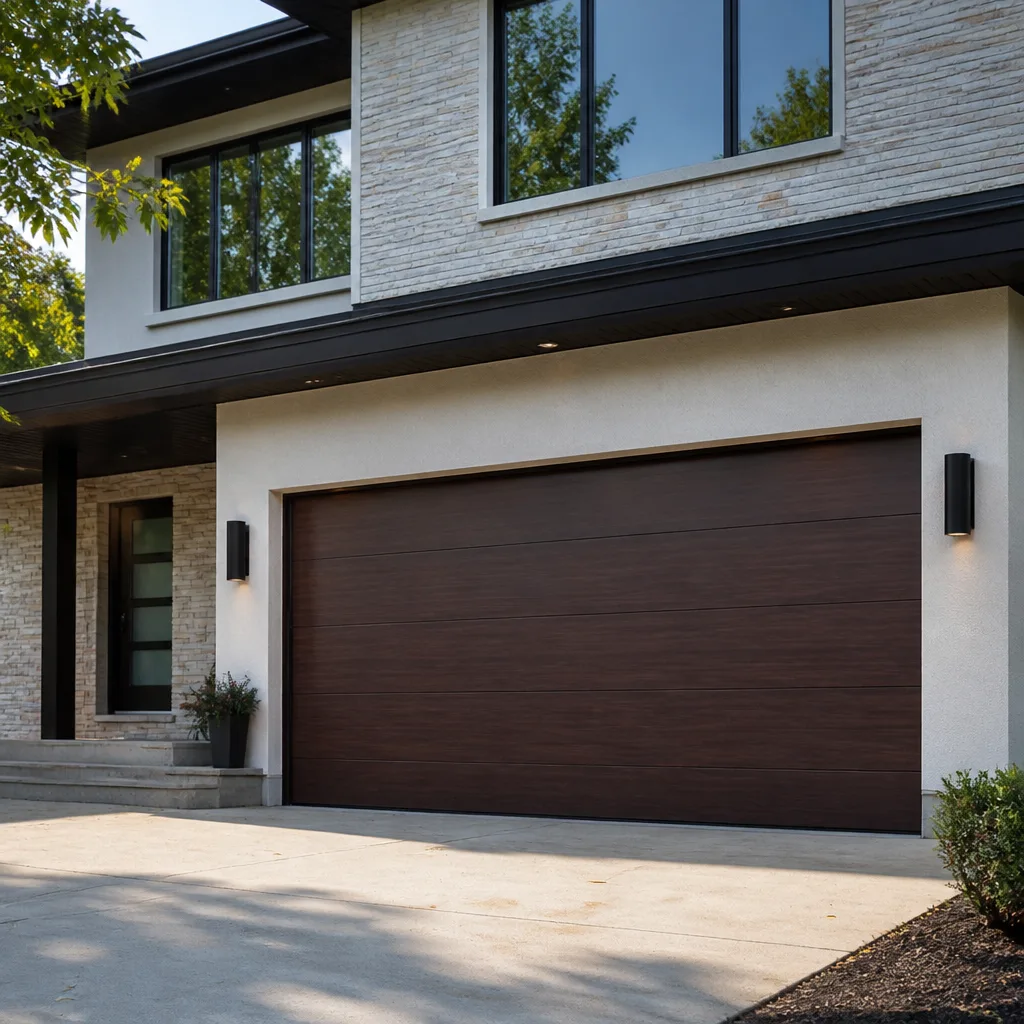 Modern flush
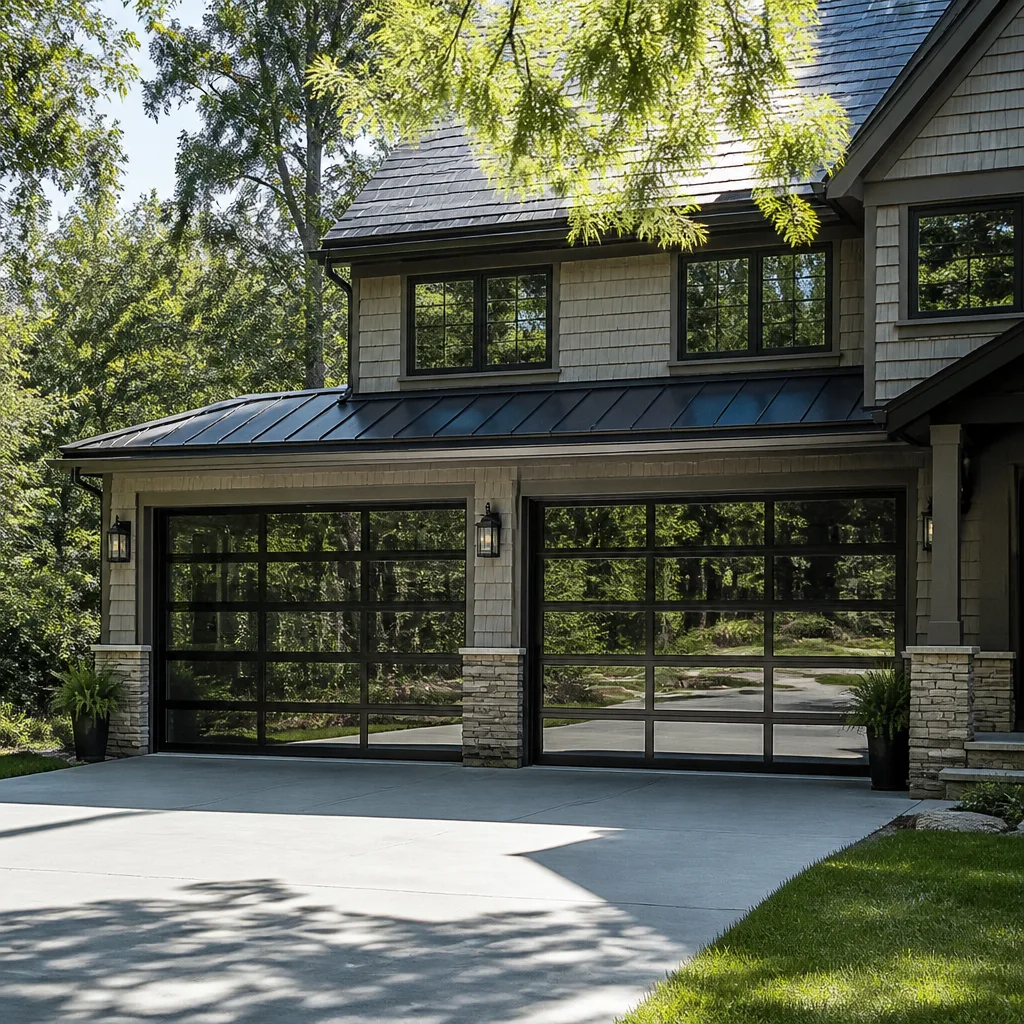 Full-view glass
 LiftMaster openers
 Chamberlain openers
Full 25-point door and opener safety check with every visit - springs, cables, rollers, tracks, and your LiftMaster or Chamberlain opener included
You get a price before we start. It does not change when the pro arrives.
Get your free estimateGarage Door Warning Signs: A Bristol Homeowner’s Reference Guide
When your garage door hesitates on the way up and you blame the opener, there’s a 60% chance you’re wrong. That hesitation is more often a spring losing tension or a roller dragging on a bent track, and replacing the opener won’t fix either one. Most garage door failures announce themselves weeks in advance, but the clues point at components homeowners rarely suspect. A grinding noise blamed on the motor is usually dry roller bearings. A door that creeps down after it opens often has a torsion spring that’s lost a third of its tension. In this Bristol guide, we walk through each symptom and trace it to the part that’s actually failing, so you know what you’re looking at before you call anyone.
Quick Answer
The main warning signs of a failing garage door in Bristol are grinding, squealing, or banging noises during operation, a door that reverses before closing or moves unevenly, visible cable fraying or slack, cracked or gapped torsion springs, and a door that won’t stay up when you lift it halfway. Any of these mean the door needs professional attention, and a broken spring or snapped cable means stop using it entirely until a technician inspects it.
Styles & brands we work with
- Raised-panel steel
- Carriage house
- Modern flush
- Full-view glass
- LiftMaster openers
- Chamberlain openers
Table of Contents
- The Symptom-to-Component Diagnostic Matrix
- What Each Garage Door Noise Actually Tells You
- Torsion Spring Warning Signs You Can See
- Cable Fraying Patterns and Roller Wear Indicators
- Safety Sensor Warnings Bristol Homeowners Ignore
- Adjustment vs. Replacement: The Threshold Points
- Which Warnings Mean Stop Now vs. Watch and Schedule
The Symptom-to-Component Diagnostic Matrix
Most garage door problems show up as a symptom in one place and originate in another. Learning to trace the symptom to its real source saves you from paying for repairs you don’t need. Here’s the diagnostic map our technicians work from when a Bristol homeowner describes what they’re hearing or seeing.
- Grinding: Dry or worn roller bearings, or metal-on-metal contact from a bent track. Almost never the opener.
- Squealing: Failing roller bearings or worn hinges, less often a dry torsion shaft.
- Banging: Loose hinge bolts, or a torsion spring that has lost tension and is letting the door drop hard on close.
- Clicking: Opener gear or limit switch issue, or a stripped gear inside the motor housing.
- Slow, labored opening: Spring tension loss, a dragging roller, or a misaligned track.
- Door stops mid-travel then reverses: Safety sensor misalignment or a door binding on the track.
- Door won’t stay up at the halfway point: Broken torsion spring or snapped extension spring, a stop-using-it situation.
- Door closes unevenly on one side: Cable issue, a stretched spring on one side, or a bent vertical track.
That first entry is the one that costs Bristol homeowners the most. Grinding is the single most common noise complaint we get, and it’s almost always bearing wear in the rollers, not a motor problem. Homeowners who replace an opener to fix a grinding noise get a new motor and the same grind on the first cycle. The fix is usually a roller and bearing replacement, which is a much smaller job.
What Each Garage Door Noise Actually Tells You
Sounds are the earliest and most reliable warning sign a garage door gives you. A healthy door makes a low, even hum from the opener and a soft roll from the panels. Anything else is a signal worth decoding.
Grinding
Grinding is metal against metal, and it comes from one of three places: worn roller bearings, a bent track the rollers scrape against, or the torsion shaft turning dry inside its bearings. Run your hand along the track (with the door closed and the opener off) and feel for a flat spot or dent. If the track is straight, the rollers are the likely culprit.
Squealing
Squealing is friction at high pitch. The most common cause is a failing roller bearing that’s lost its grease. Second most common: a hinge pin that’s worn oval. A high-pitched squeal that only happens in cold weather often points to a torsion spring that’s tightening up as the temperature drops, which is a sign the spring is near the end of its life.
Banging
A single loud bang at the bottom of travel is usually a hinge bolt that’s worked loose, or a torsion spring that’s already broken and is letting the door slam. A series of rattles on close is usually loose panel hardware. Both are worth looking at before they become bigger problems.
Clicking
Clicking on a door that otherwise moves is almost always inside the opener. The motor’s internal gear, the limit switch, or the logic board can all click before they fail outright. If the door still cycles fine but you hear clicking, don’t ignore it. When a Genie or LiftMaster motor starts clicking, the next stage is a door that stops mid-travel and refuses to budge.
Torsion Spring Warning Signs You Can See
Torsion springs are the most dangerous component in your garage door system. They hold the full weight of the door in tension, and when one fails it releases that energy in a fraction of a second. In our experience, most spring failures are preceded by visible warning signs for weeks or months. Here’s what to look for, with the door fully closed and the opener disengaged.
The Light Test
Walk to the torsion bar above the door and look at the spring coils. A healthy spring has coils that sit flush against each other. A spring with a gap or a full coil-length stretch between two coils has lost tension and is close to failing. The gap rarely appears overnight, which gives you time to schedule a replacement.
Crack Patterns
Springs don’t just snap. They usually crack at one specific point first, and it’s the same point on nearly every spring we see. Look at the very ends of the coil where the spring connects to its winding cone and its stationary cone. A hairline crack there, or a slight separation of the metal, means the spring is on borrowed time. If you see a small chunk of metal missing or a visible split, treat that door as off-limits until a technician handles it.
The Door Won’t Hold Its Position
Pull the emergency release cord to disengage the opener. Lift the door by hand to about waist height and let go. A balanced door stays put. A door that sags back toward the ground has a spring that’s lost too much tension. A door that shoots up on its own has a spring that’s overpowered, which usually means one of two springs on a two-spring system has already broken and the door is running on the survivor. Either way, reengage the opener and call for garage door spring repair. Labor on springs is a specialist job and there’s no safe way to do it yourself.
Seasonal Failure Timing in Bristol
Springs in Bristol tend to fail on the first cold snaps of late fall and the first warm swings of early spring. Metal contracts and expands with temperature, and a spring that’s already lost tension will cross its failure threshold during a swing. If your door is more than a few years old and the spring has never been inspected, it’s worth having a technician look before the weather turns.
Cable Fraying Patterns and Roller Wear Indicators
Cables do the same work as springs but fail differently. They fray, they stretch, and sometimes they slip off a drum. Because they run along the side of the door and down past the bottom bracket, they’re easy to see if you know what you’re looking at.
What Fraying Looks Like
Look at both cables from where they attach to the bottom bracket up to the drum. A healthy cable is a smooth, tight bundle of steel strands. A failing cable has a frayed or frizzy look, like a rope that’s coming untwisted, or a kink where it should be straight. Any cable where individual strands are visible and separated is at risk of snapping. A cable that’s come off the drum entirely means the door is hanging by one corner, and it needs to stay closed until someone fixes it. This is one of the most common jobs we handle on garage door repair calls in Bristol.
Roller Wear Indicators
Rollers are the wheels inside the track. They’re quiet when healthy and the source of most grinding when not. Look at each roller while the door is closed and the opener is disengaged:
- Steel rollers: Look for flat spots or grooves worn into the outer surface. A steel roller with visible flat spots needs replacing.
- Nylon rollers: Look for cracks in the bearing race, or a roller that wobbles when you push the door sideways by hand.
- Any roller: Look for a bearing seal that’s failed, which shows as rust-colored streaks on the inside face of the track.
Rollers are inexpensive and easy to swap. Waiting until a bearing seizes and scores the track turns a small parts job into a track replacement. If you’re seeing any of these wear signs, our team covers garage door opener repair and roller service in the same visit when the diagnosis points that way.
Safety Sensor Warnings Bristol Homeowners Ignore
The safety sensors at the bottom of your door’s vertical tracks are the second most common source of “my door won’t close” calls we get. The sensors fire a light beam across the opening. If anything breaks the beam, or if the sensors lose alignment, the door refuses to close. Because the sensors look fine from a distance, this is the warning sign most Bristol homeowners ignore until the door quits working entirely.
Visual Check
Both sensors should have a small LED on them that’s lit steadily. One sensor sends the beam, the other receives it. If either LED is flashing, off, or orange when it should be green, the sensors need attention. Dim or flickering LEDs usually mean a loose wire or a failing sensor unit.
Alignment Check
Look down the line between the sensors. They should be at the same height and aimed at each other. A sensor knocked slightly out of line by a lawn mower, a bike, or a car bumper will fail to close the door. A quick visual alignment check catches this in seconds.
Dirt and Obstruction
Dust, spider webs, and grass clippings on the sensor lens block the beam. This is the most common cause of a sensor that looks fine but doesn’t work. Wipe the lens with a dry cloth and test the door. If the door still won’t close, the sensor itself or its wiring is the problem.
Warning Signs Worth Acting On
- Door closes partway then reverses without any visible obstruction.
- Sensor LED is off or flickering when the door is powered.
- Door responds to the wall button but not the remote (this is a remote or receiver issue, not the sensors).
- Garage door opener beeps and light flashes ten times before the door reverses (a sensor fault code on many modern openers).
Safety sensors are not optional. An unaligned or failed sensor can let the door close on a child or pet. If your sensors are faulty and you can’t resolve it with a lens cleaning and alignment check, get a technician out to look at it.
Adjustment vs. Replacement: The Threshold Points
Not every warning sign means “replace the part.” Some mean “adjust it.” The difference between the two usually comes down to wear limits, and knowing where those limits are saves Bristol homeowners a lot of unnecessary cost.
Here’s how we think about it, and this table reflects the thresholds our technicians use when a Bristol homeowner asks the “do I need a new one?” question.
Springs
- Adjustment: A spring with no visible gap or crack, but with a door that’s slightly out of balance. Winding it to restore balance is doable by a technician, and spring repair remains a spring replacement job on some setups, but a light adjustment is sometimes all that’s needed.
- Replacement: Any crack, gap, or missing chunk on the coil. Any torsion spring that has lost enough tension that the door won’t stay open at the halfway point. Any single spring on a two-spring system that has already broken (both should be replaced together, since the surviving spring will fail soon after).
Cables
- Adjustment: A cable that’s slipped slightly off the drum but is intact and smooth can sometimes be re-seated.
- Replacement: Any frayed cable, any cable with visible individual strands, any kinked cable. Cables are replaced in pairs when one fails on a two-cable door, because the surviving cable has been carrying extra load.
Rollers
- Adjustment: A loose hinge or a bracket that’s worked its way slightly out of alignment. Rollers that roll smoothly but squeak are usually a lubrication issue, not a replacement.
- Replacement: Any flat spot, any wobble, any visible bearing wear. Rollers are replaced as a set of ten or twelve when more than two show wear, since they wear at the same rate.
Track
- Adjustment: A slightly out-of-line vertical track can be straightened and re-anchored.
- Replacement: A track with a kink or bend, or one that’s pulled away from the wall. Track replacement is a job for a technician because the door relies on the track for its safety, and a misaligned track will bind the door and stress the opener.
Which Warnings Mean Stop Now vs. Watch and Schedule
Not every warning sign is an emergency, but a few are. The right response depends on which component is failing and how far along the failure is. Here’s the risk tiers we use when a Bristol homeowner calls in and describes a symptom.
Tier 1: Stop Using the Door Immediately
- Broken torsion spring (a loud bang followed by a door that won’t lift, or one that slams). The spring holds the door’s full weight. Running the opener on a broken spring will strip the opener and can drop the door.
- Snapped or visibly frayed cable. A door held up by one cable can swing or fall unexpectedly.
- A door that closes on its own when released halfway. That’s a spring failure and it can drop the door on someone standing under it.
- A bent or detached track. The door’s not safely contained in the track and can leave it.
Tier 2: Schedule Service Soon
- Grinding or squealing noises. Roller bearing or hinge wear. The door works, but the wear accelerates quickly.
- Slow or hesitating operation. Usually a spring that’s losing tension or a roller that’s dragging. Get it looked at before the spring crosses its failure point.
- Occasional safety sensor faults. Small alignment issue, but a child or pet safety concern if ignored.
- Visible spring gap but no crack. Time to schedule a spring inspection and replacement.
Tier 3: Watch and Order Parts
- Cosmetic dents or scrapes on panels. Not a safety issue, though a Clopay or Amarr panel replacement is often possible if the damage is more than cosmetic on a panel that’s structural.
- Slow opener response. Remote batteries, or an opener receiver on its way out.
- Minor rust on rollers. Worth cleaning and lubricating, and worth watching.
When in doubt, err toward Tier 2. A grinding door is not a Tier 3 problem, and a spring that’s showing a gap is not something to sit on for months. We answer 24/7, and fast dispatch runs from 7am to 7pm, Sunday through Friday.
Common Mistakes to Avoid
- Blaming the opener for everything. More than half of “opener problems” we diagnose in Bristol turn out to be spring, track, or roller issues. Replacing an opener to fix a door that won’t open is one of the most common expensive mistakes we see.
- Ignoring the small clicking sound. A Genie or LiftMaster motor that clicks before failing gives you a few weeks of warning. The customer who ignores the click and waits for the door to stop mid-cycle ends up paying for a full motor replacement instead of a small adjustment.
- Treating spring work as a DIY project. Torsion springs are under extreme tension. A spring that slips during DIY removal can cause serious injury. This is one component where a trained technician is non-negotiable, and there’s no safe shortcut.
- Waiting until the door won’t close. Safety sensor faults usually appear as an occasional reverse before failing completely. If the LED is starting to flicker, clean and align it now, not after the door quits closing on a school morning.
- Assuming a spring gap is cosmetic. A bay window of visible coil gap is the spring telling you it has a few weeks left. Waiting past that point usually means a snapped spring and a door you can’t close until it’s fixed.
- Replacing only one spring on a two-spring setup. The surviving spring has been carrying the full door load while the other was out. It will fail within weeks of the replacement. Replace springs in matched pairs.
- Hiring a general handyman for springs or cables. Garage door springs and cables are a specialty. A handyman who’s excellent at drywall may not know the winding tolerances for a Wayne Dalton spring system. Use a garage door specialist.
See the difference
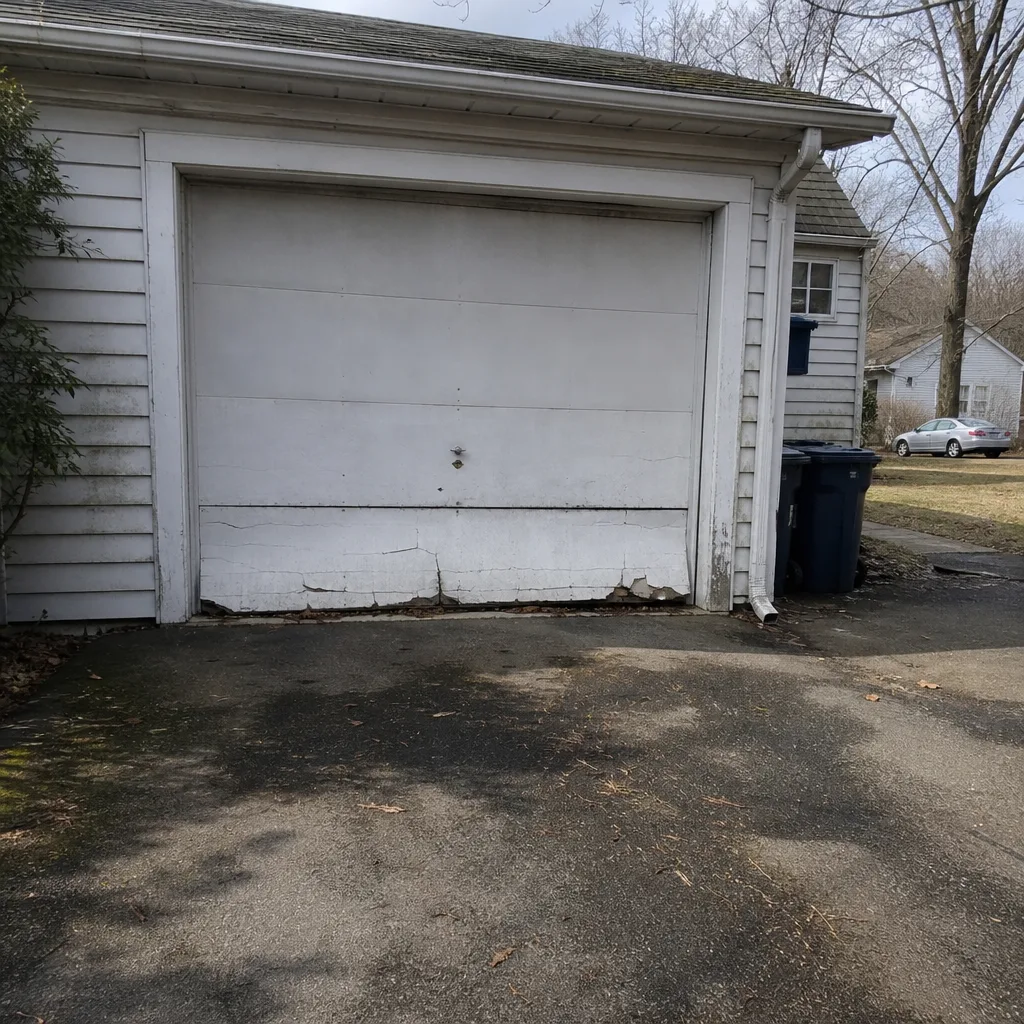 Before
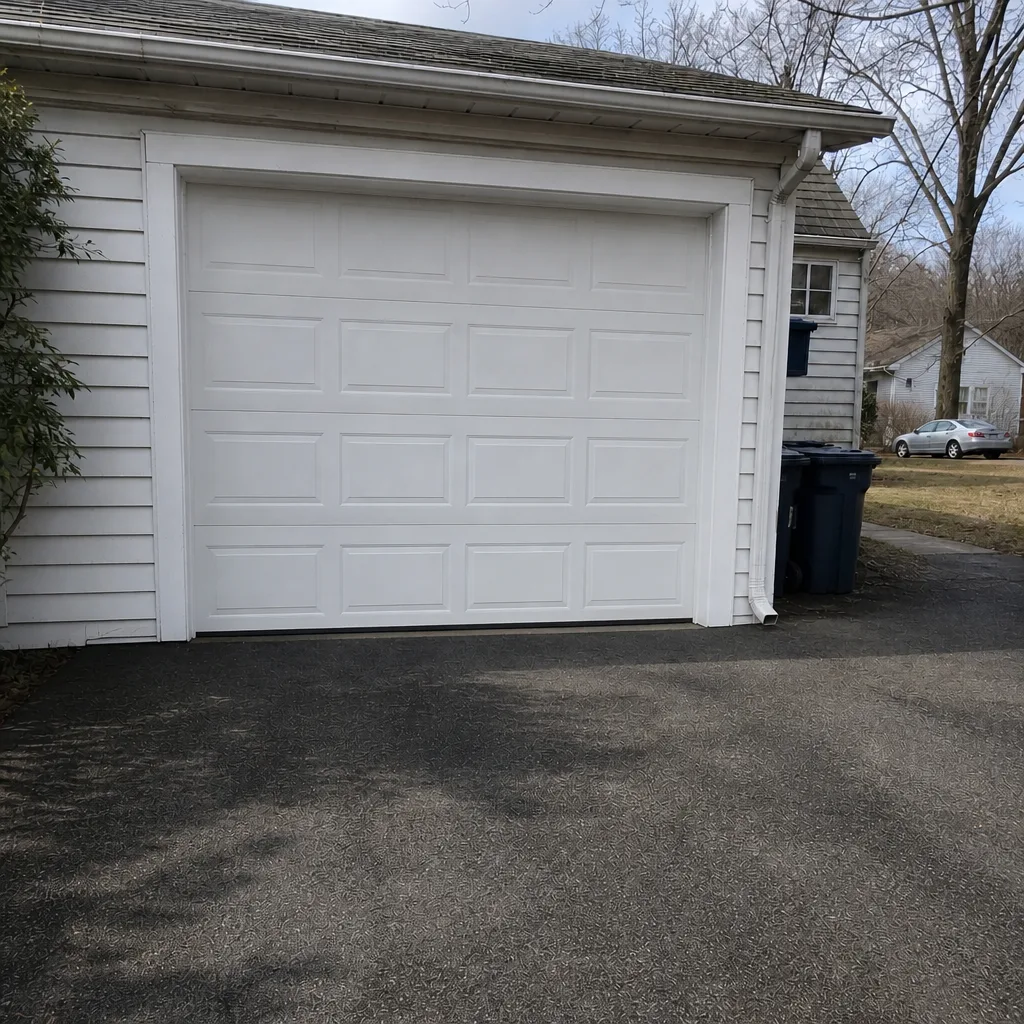 After
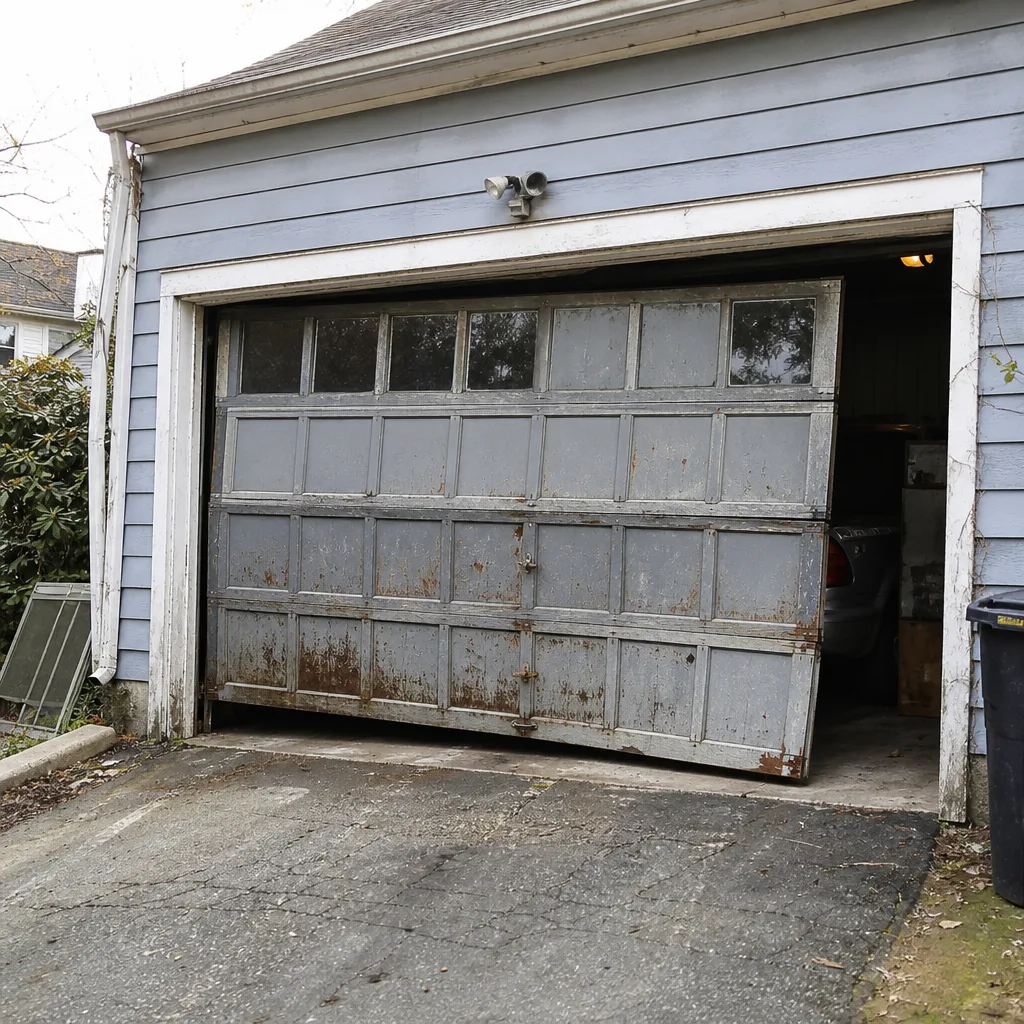 Before
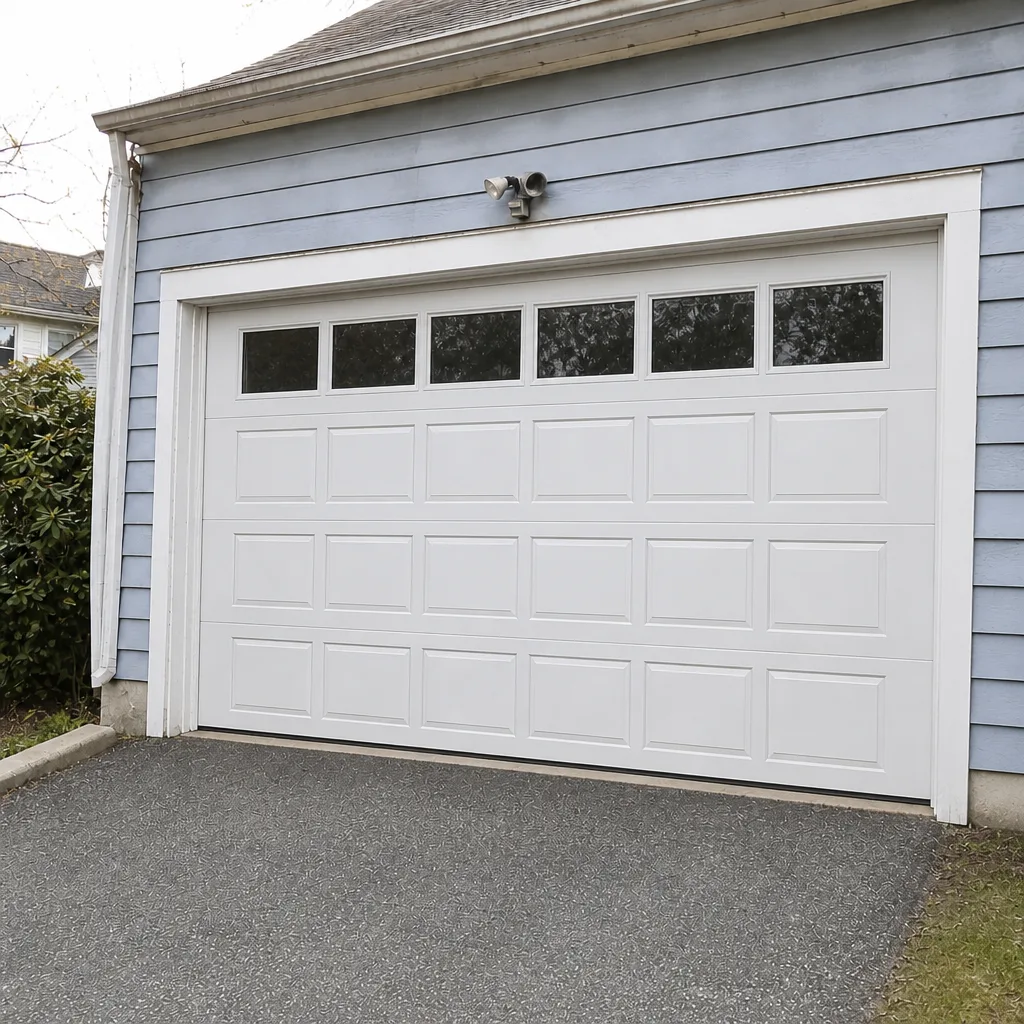 After
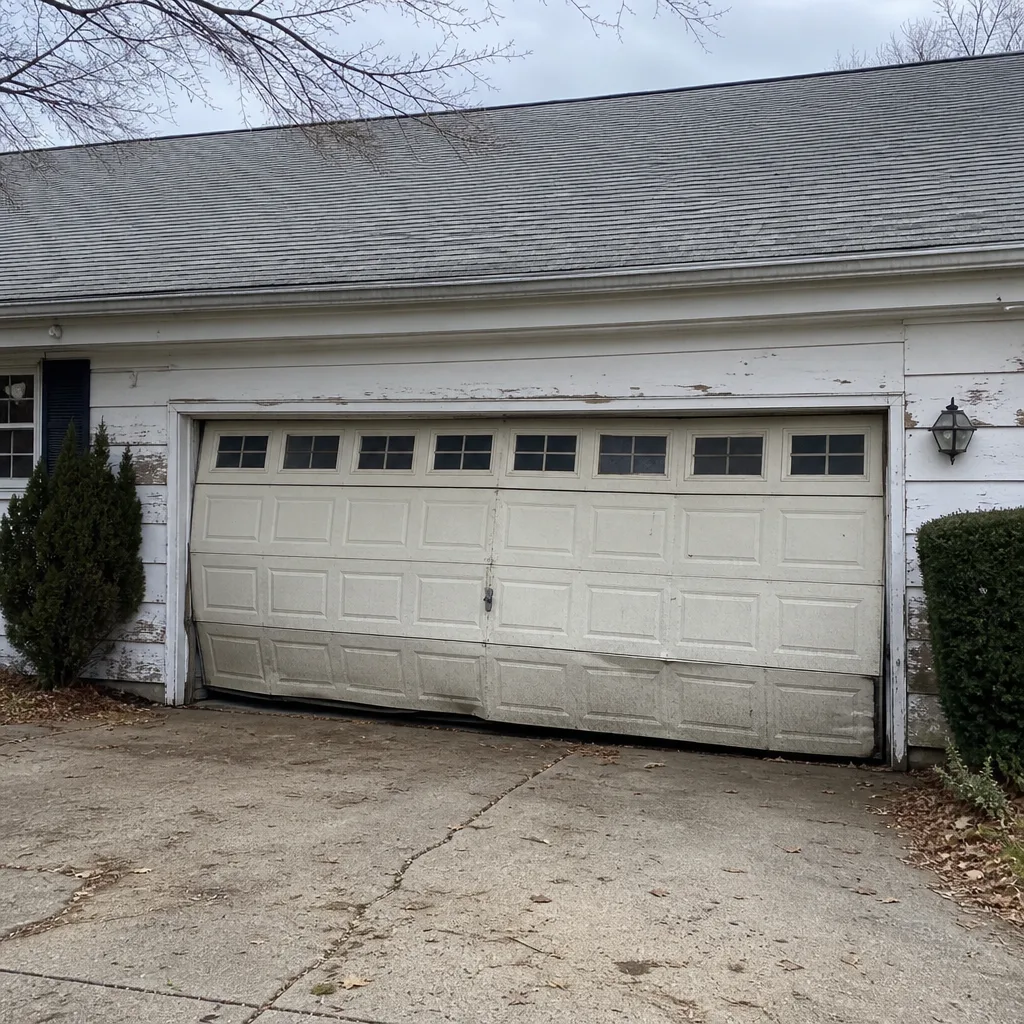 Before
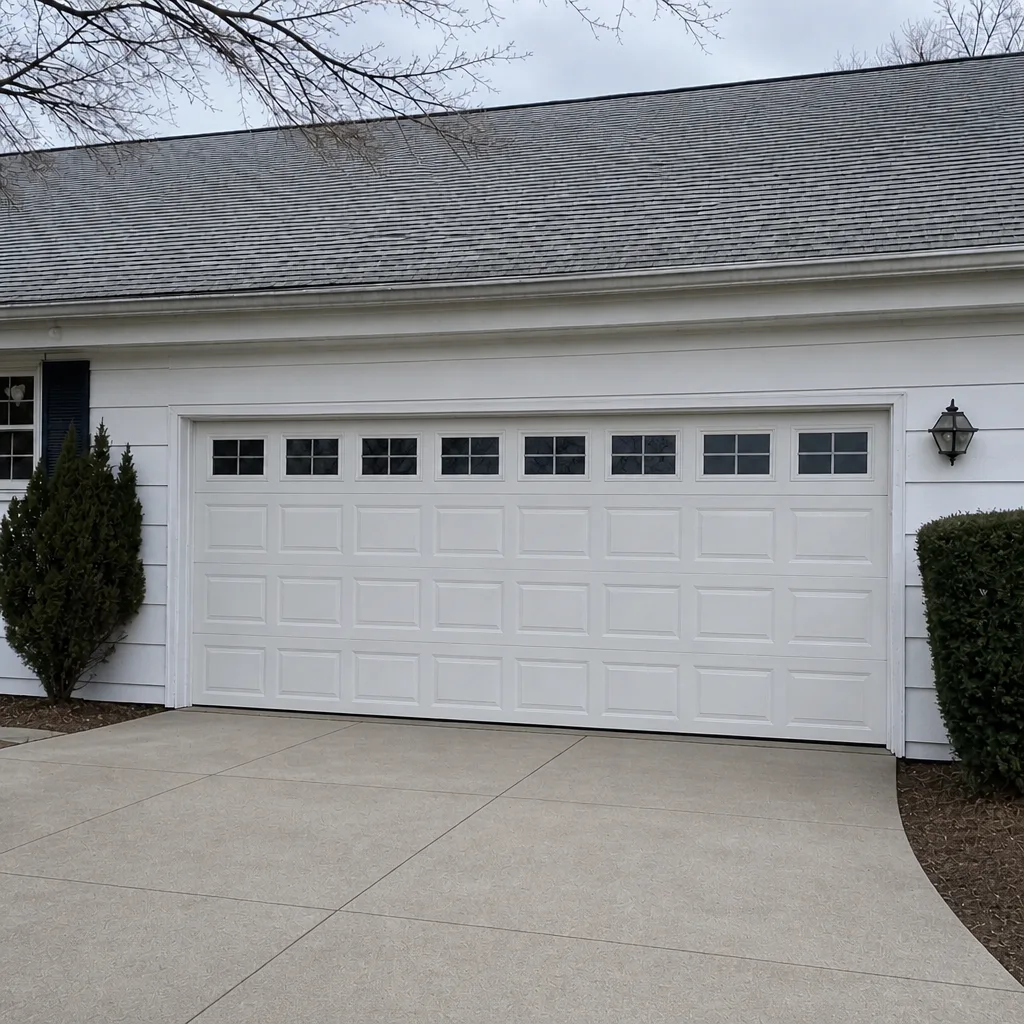 After
When to Call a Professional
You should call a professional the moment you see a broken or cracked spring, a frayed or snapped cable, a bent track, or a door that drops when released halfway. These are Tier 1 warnings where continuing to use the door risks injury or makes the repair more expensive. Beyond that, call whenever the symptom matches something in the diagnostic matrix that points to a component you can’t safely inspect yourself. If you’re not sure, describe what you’re hearing or seeing and we’ll tell you whether it’s a call-today or a schedule-this-week problem.
Bristol Garage Door Repair Pros offers free estimates in Bristol. Call (844) 693-1911. Our technicians have up to 12 years of experience and are factory-familiar with LiftMaster, Chamberlain, Genie, Clopay, Amarr, Wayne Dalton, Craftsman, and Raynor systems.
Frequently Asked Questions
The most common warning signs in Bristol are grinding or squealing noises on operation, a door that hesitates or reverses before closing, visible spring gaps or cracks, and safety sensor LED lights that flicker or stay off. Grinding and noises are almost always roller bearing or track issues rather than opener problems. Any of these symptoms is worth a technician visit before the door fails completely. Call (844) 693-1911 for a free estimate.
Spring replacement is quoted per spring based on the door’s weight and spring type, and a two-spring door needs both replaced together. The written estimate sets the final price, and we quote before any work starts, so you know the number before we touch the door. Call (844) 693-1911 for an exact quote. Estimates are free.
No. A broken torsion spring lets the door’s full weight rest on the opener, cable, and track, and running the opener on a broken spring can drop the door or strip the opener gear. Keep the door closed and call for service. We answer 24/7 and dispatch runs from 7am to 7pm, Sunday through Friday, so you’ll get a technician out quickly.
A grinding noise almost always means worn roller bearings or metal-on-metal contact from a bent track, not an opener problem. The rollers are the most common culprit, and roller replacement is a small job that resolves the noise in one visit. If the track is bent or scored, that needs addressing too. Call (844) 693-1911 for diagnosis.
If the spring has no visible gap or crack but the door is out of balance, it may only need adjustment. If there’s any gap between coils, a visible crack, or a chunk missing, the spring needs replacing and the door should stay down until then. Springs are a matched pair; on a two-spring door, one failure usually means both are due. Call (844) 693-1911 for an inspection.
Yes. Same-day service is standard for emergency calls, and we handle urgent failures from broken springs to snapped cables. We answer 24/7, with fast dispatch from 7am to 7pm, Sunday through Friday. Call (844) 693-1911 and describe what’s happening so we can prioritize the call.
Yes. The local professionals we connect you with are licensed and insured as their state requires, and our team specializes in garage door systems rather than splitting attention across trades. Our technicians have up to 12 years of experience on LiftMaster, Chamberlain, Genie, Clopay, Amarr, Wayne Dalton, Craftsman, and Raynor doors and openers. Call (844) 693-1911 for a free estimate.
The Bottom Line
The garage door warning signs in this guide are worth knowing because they let you act before a small problem becomes an emergency. Grinding usually means roller bearings, not a bad opener. A spring gap or crack means a spring replacement is coming, and the door stays down until it’s done. A flickering safety sensor LED is a small alignment fix today and a door that won’t close tomorrow. If you take nothing else from this Bristol guide, remember the risk tiers: broken springs, snapped cables, bent tracks and doors that drop when released halfway get the door out of service immediately. Everything else is a scheduled repair before it becomes urgent.
For a free estimate on any garage door issue, call Bristol Garage Door Repair Pros at (844) 693-1911. We answer 24/7. Fast dispatch from 7am to 7pm, Sunday through Friday. Our full service scope covers repair, opener repair, spring repair, and new installation, so a small fix today and a replacement down the road stay with the same team. If you’re not sure which warning sign you’re hearing or seeing, call and describe it. Diagnosis is what we do. See Bristol Garage Door Repair Pros for the full service list and book a visit.
Written by the team at Bristol Garage Door Repair Pros.