
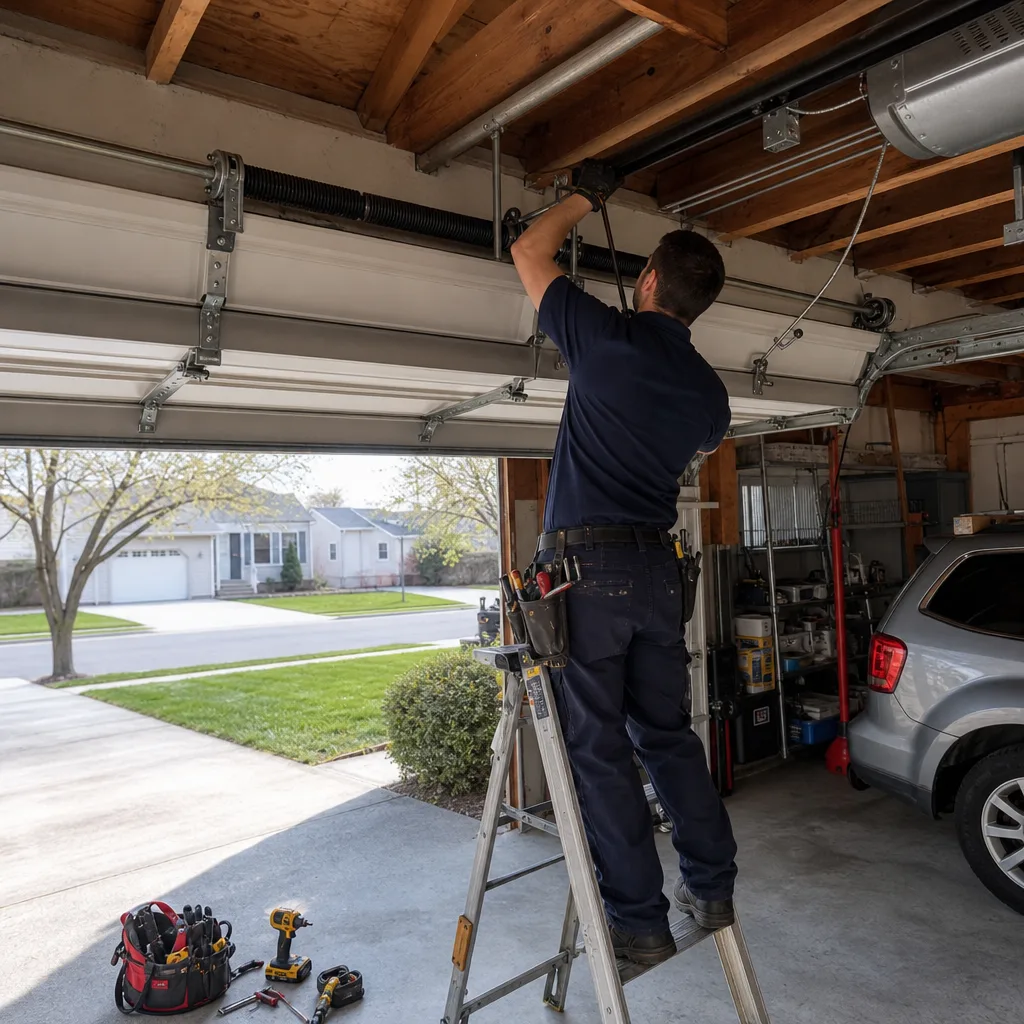
Last updated November 21, 2026
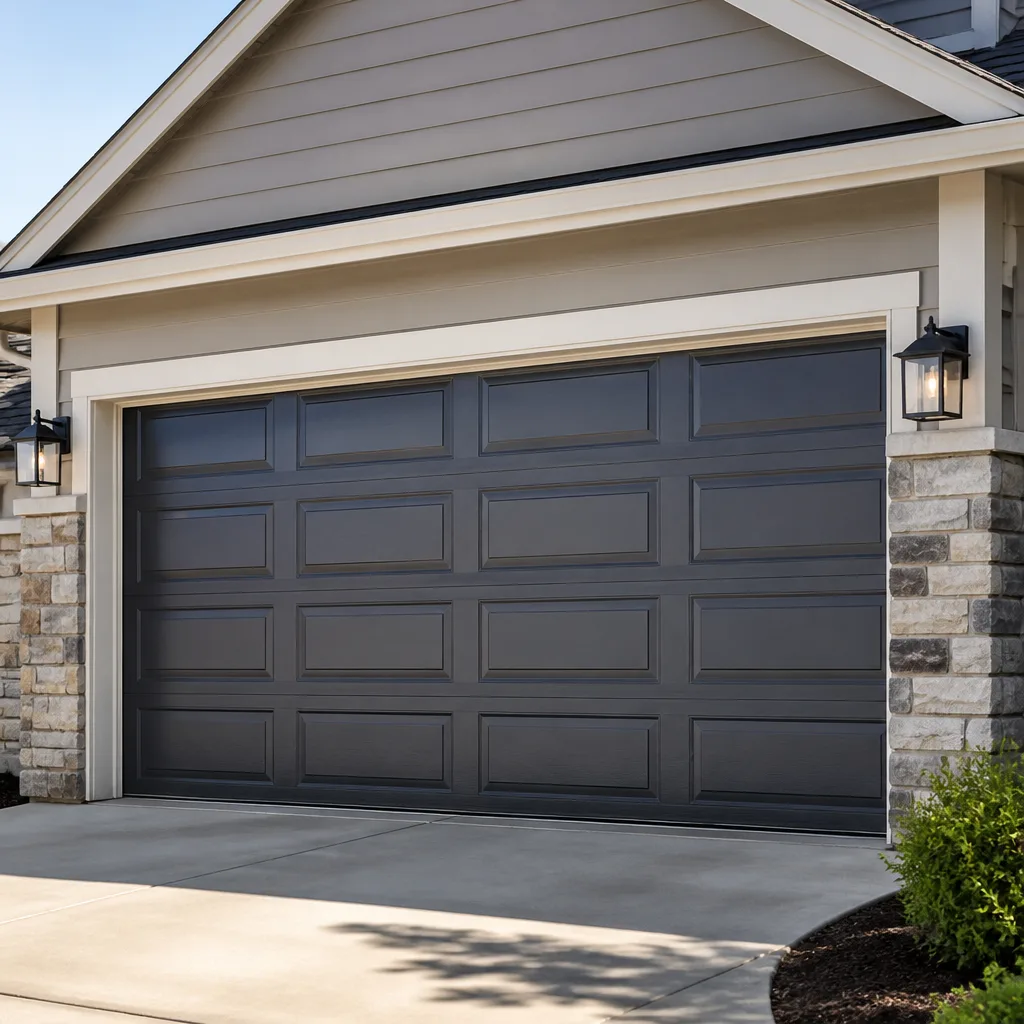 Raised-panel steel
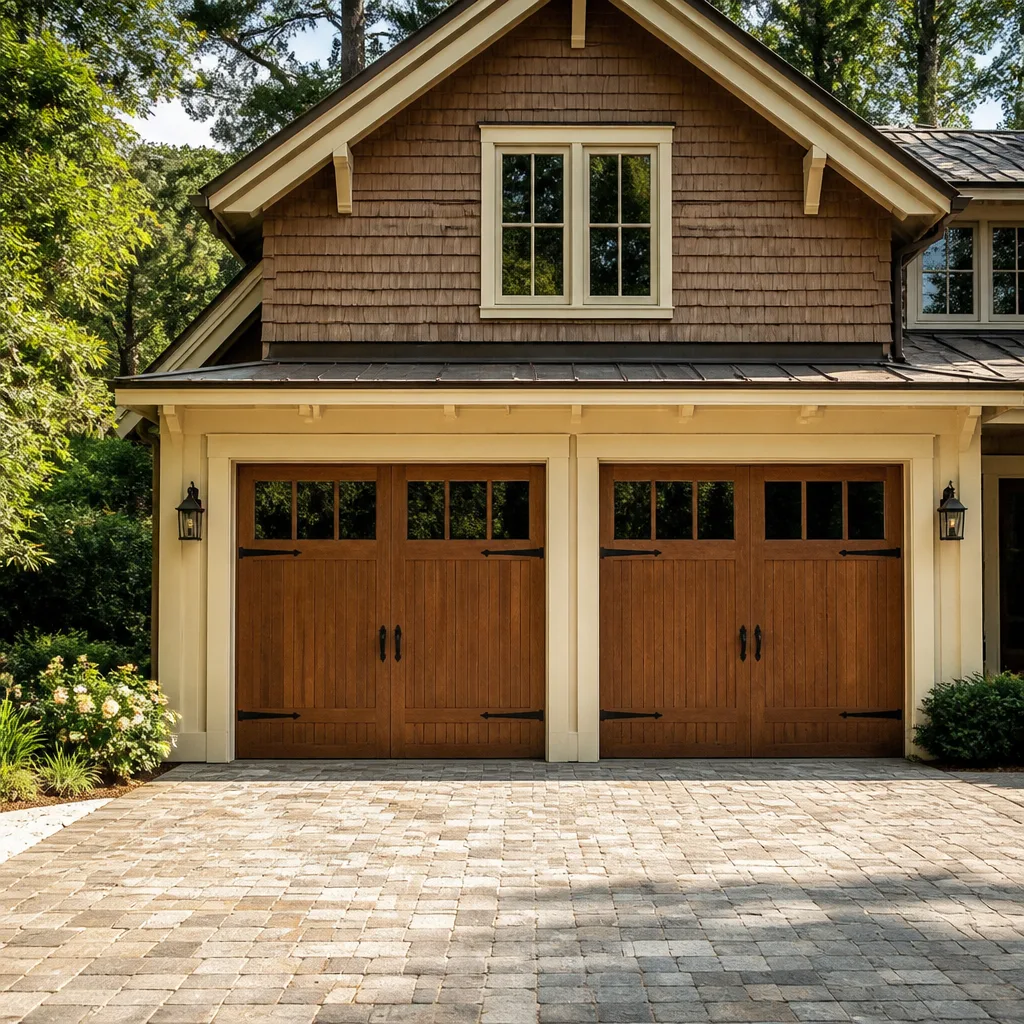 Carriage house
 Modern flush
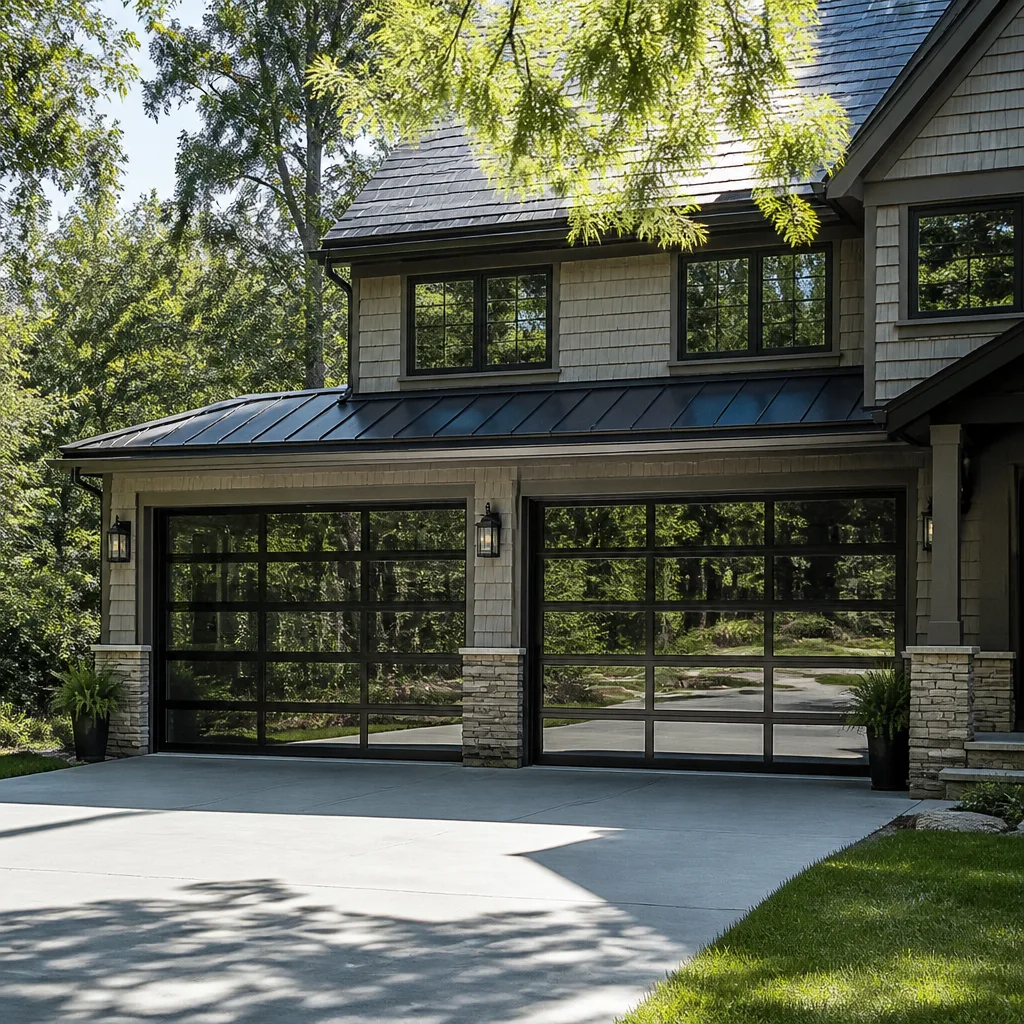 Full-view glass
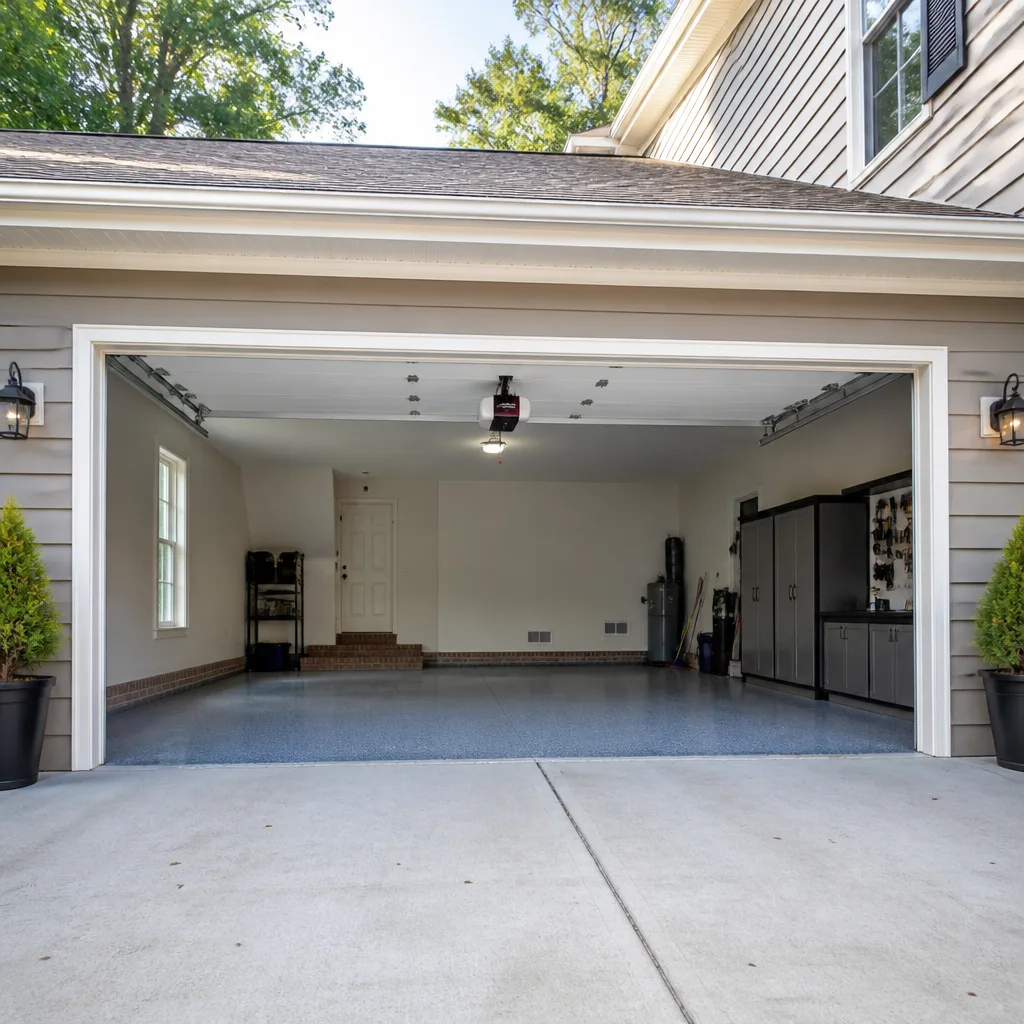 LiftMaster openers
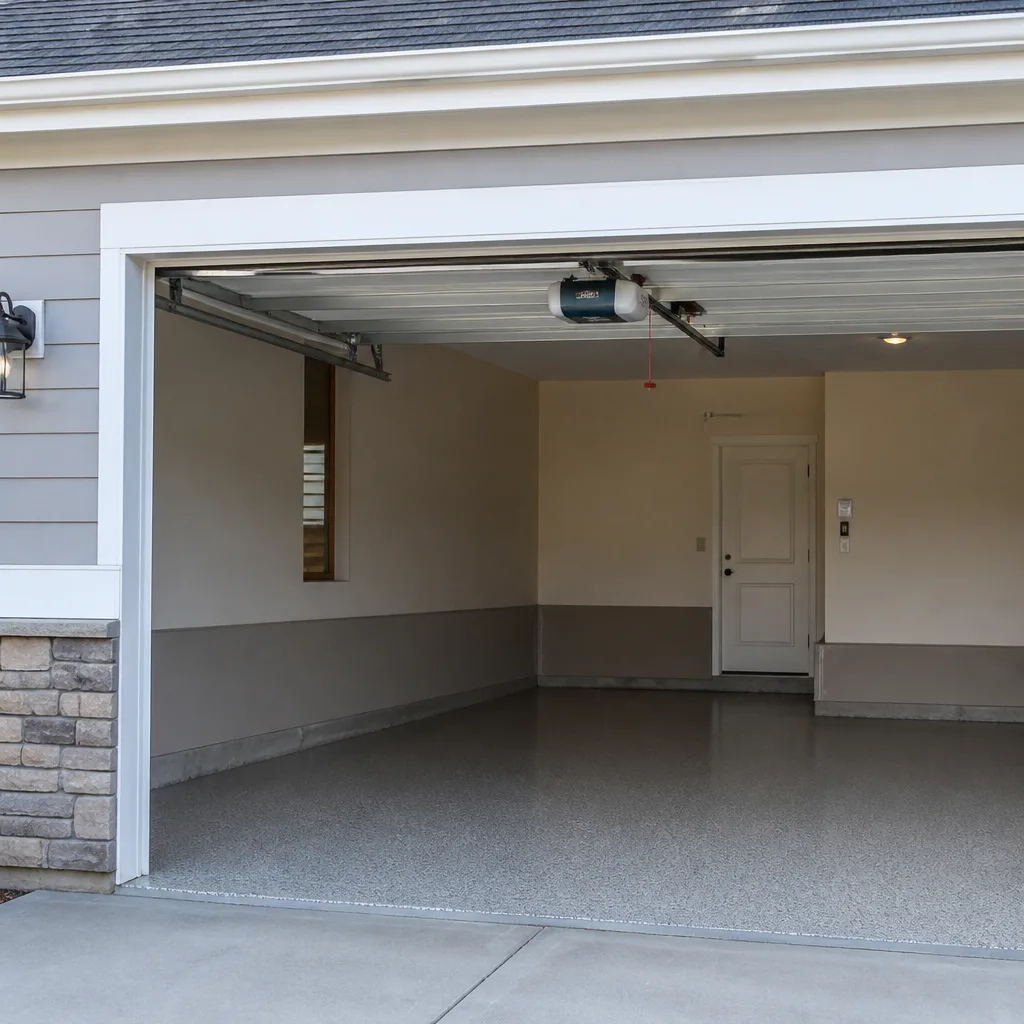 Chamberlain openers
Full 25-point door and opener safety check with every visit - springs, cables, rollers, tracks, and your LiftMaster or Chamberlain opener included
You get a price before we start. It does not change when the pro arrives.
Get your free estimateThe Complete Guide to Garage Doors in Bristol
Most Bristol homeowners assume a garage door dies of old age. In our experience, that’s rarely what happens. The door that starts binding in February or the opener that strains in August usually isn’t worn out. It’s reacting to what Bristol weather puts it through. This city sees roughly 46 inches of snow a year, and the swing between a hard January low and a humid July high is wide enough to work a door assembly hard every single season. Thermal movement, moisture, and road salt do more damage here than daily use ever will.
This guide maps the whole ownership arc for a garage door in Bristol, from choosing materials that survive the local climate to knowing when a spring is about to let go. By the end you’ll understand what your door is actually up against and how to make it last.
Quick Answer
A garage door in Bristol is a long-term investment that needs climate-aware choices: a steel door with a proper gauge rating, insulated sections for attached garages, and annual spring and seal checks, because the local freeze-thaw cycle shortens component life compared to manufacturer ratings. Most Bristol failures trace back to temperature swings, humidity, and road salt exposure rather than daily use, and they’re preventable with the right materials and routine maintenance. When something does fail, a specialist who knows your specific brand and system resolves it faster than a generalist.
Styles & brands we work with
- Raised-panel steel
- Carriage house
- Modern flush
- Full-view glass
- LiftMaster openers
- Chamberlain openers
Table of Contents
- How Bristol’s Climate Shortens Your Door’s Lifespan
- Which Garage Door Materials Hold Up in Bristol
- Why Attached Garages in Bristol Create Opener Problems
- Matching Door R-Value to Bristol Heating Costs
- Permits, HOA Rules, and Zoning in Bristol
- Knowing Your Brand Before a Technician Arrives
- A Year-Round Maintenance Plan for Bristol Doors
- When to Repair and When to Replace
How Bristol’s Climate Shortens Your Door’s Lifespan
The number one cause of premature garage door failure in Bristol is the freeze-thaw cycle, not wear from use. Every winter the temperature crosses the freezing point repeatedly, and each crossing works metal and seals a little harder than steady cold would. A torsion spring rated for a set number of cycles will often fail sooner here than its rating suggests, because the metal is expanding and contracting with the mercury rather than holding steady.
Here’s what the local climate attacks, season by season:
- Springs and cables: Repeated contraction in cold and expansion in heat fatigues the steel. Cables stretch and fray faster, and springs lose tension unevenly, which is why a door can start feeling heavy or jerky long before a spring visibly breaks.
- Bottom seals: Freeze-thaw drives moisture into the rubber, and the seal cracks and pulls away from the floor. A failed seal lets in cold air, water, and pests, and it puts extra strain on the door as it closes.
- Panels: Metal panels bow and warp when one side heats faster than the other. On a south-facing Bristol door, the sun-facing panels can move noticeably more than the shaded side through the seasons.
- Track and hardware: Moisture and temperature movement loosen bolts and shift track alignment. A door that ran quietly in October often starts rattling by February.
Snow matters too. The 46 inches Bristol averages each winter means weeks of wet, gritty slush tracked onto the door and into the tracks. Add road salt splash from nearby routes and the lower panels and hinges take a steady chemical beating. Salt doesn’t just look bad; it accelerates corrosion on any unprotected steel surface it reaches.
None of this means a Bristol door is doomed. It means the maintenance calendar here is tighter than in a mild climate. Checking springs, cables, and seals before the first hard freeze and again after the thaw is the single most effective habit a local homeowner can build.
Which Garage Door Materials Hold Up in Bristol
For most Bristol homes, a 24- or 25-gauge steel door is the practical sweet spot between durability and price, and it handles local humidity far better than wood. Steel holds its shape through temperature swings, resists the moisture that swells wood, and takes a factory finish that stands up to road salt reasonably well when the lower panels are kept clean. Thinner 27- or 28-gauge steel is common on builder-grade doors and dents more easily, so the gauge rating is worth checking before you buy.
The main material choices and how they fare locally:
- Steel (24-25 gauge): The most reliable choice for Bristol’s climate. Resists warping, takes insulation well, and needs only occasional cleaning to manage salt exposure. Homes near Rte 72 and Rte 229 see more road salt splash and benefit from a regular rinse of the bottom panels.
- Composite: A newer option that resists moisture and rot without the upkeep of wood. It’s a reasonable pick for homeowners who want a wood look without the seasonal swelling that plagues real timber in Connecticut humidity.
- Wood: Beautiful, but the hardest to maintain here. Bristol’s humid summers and wet winters make wood doors swell, crack, and need refinishing on a short cycle. If you go wood, budget for regular sealing.
The humidity piece deserves attention. Connecticut summers are muggy enough to keep a garage interior damp, and that moisture sits against the inside face of the door all season. Steel with a factory finish shrugs this off. Wood absorbs it. And any steel door, regardless of gauge, benefits from keeping the bottom edge and hardware dry and free of the salt-laden slush that builds up through winter.
One detail that catches people out: a heavy wood or thick insulated steel door needs a stronger opener and spring system than a basic single-layer steel door. The material choice ripples through the whole assembly, which is why it’s worth getting the door and the opener matched as a system rather than piecemeal.
Why Attached Garages in Bristol Create Opener Problems
If your garage is attached to the house, the door and opener are working inside a space that shares a wall with your living area, and that changes everything. Bristol has plenty of older colonial and ranch-style homes where the attached garage sits directly against heated rooms. In those homes, the garage acts as a thermal buffer, which is good for the house and hard on the equipment.
Here’s the mechanism. An attached garage stays warmer than an unheated detached one, so it holds more moisture. When warm, humid garage air meets a cold door on a January morning, condensation forms on the door’s inner face and on the metal track and opener rail. That condensation is a slow drip onto the very components that hate moisture most: the opener’s moving parts, the springs, and the hinges. Over a season, that’s enough to rust a rail, stiffen a roller, or corrode an opener’s chain.
The thermal transfer cuts the other way too. Heat leaking through the shared wall keeps the garage warmer in winter, which is fine for comfort but means the door experiences a bigger temperature difference between its inside and outside faces. A door that’s cold on the outside and warm on the inside warps more readily than one that’s cold on both sides. That’s why an insulated door paired with a well-sealed garage is a genuine upgrade for attached-garage homes, not just a comfort feature.
Opener performance suffers in subtler ways. In a humid attached garage, a chain-drive or belt-drive opener can develop stiff joints, and a screw-drive unit can bind as condensation works into the mechanism. Homeowners near Bristol’s newer subdivisions, where attached garages are the norm and often tightly sealed, sometimes notice their opener straining more than it should. It’s rarely the opener’s fault. It’s the moisture load the garage creates.
The fix is unglamorous but effective: seal the garage-to-house door properly, keep the garage ventilated enough to dry out, and make sure the opener is rated for the door’s weight. A LiftMaster or Chamberlain unit with the right horsepower for your door handles the local conditions far better than an underpowered opener fighting a heavy moisture-swollen door. When an opener does start behaving oddly in an attached garage, it’s worth having a technician trace the cause rather than assuming the motor is failing; often the real issue is the door, the track, or the moisture, not the electronics.
Matching Door R-Value to Bristol Heating Costs
Manufacturer R-value claims are measured in a lab, and they don’t map cleanly onto what a Bristol homeowner actually feels on a heating bill. R-value tells you how well a door resists heat transfer, but its real-world effect depends on how much of your home the garage touches, how well the garage is sealed, and how cold the local winters get. A door with a high R-value on a drafty attached garage still leaks heat through the gaps around it.
Here’s how to think about it locally rather than trusting a single number:
- Check whether the garage is inside or outside your thermal envelope. An attached garage sharing a heated wall is worth insulating for. A detached, unheated garage mainly protects the door from the weather, so a basic steel door does the job and a high R-value adds little.
- Look at the door, not just the panels. A high-R-value door with poor perimeter seals and no bottom weatherstrip loses more heat than a mid-range door that’s properly sealed. Insulation and air sealing work together in Connecticut’s cold winters.
- Match insulation to the rooms above or beside the garage. If a bedroom sits over the garage, an insulated door plus an insulated ceiling does more for comfort than the door alone. If the garage is a standalone utility space, spend the money elsewhere.
- Don’t overbuy for an unheated space. Overpaying for the highest R-value on a detached garage that nobody heats is money that would have done more good on spring maintenance or a better opener.
The climate context matters. Bristol’s January lows are cold enough that an attached garage loses real heat through an uninsulated door, and some of that heat loss reaches the rooms behind it. A mid-range insulated steel door on a properly sealed attached garage is the practical answer for most local homes. The highest R-value on the market is rarely the right call unless the garage sits inside the heated envelope or carries rooms above it.
A common misstep is choosing a door by R-value alone and skipping the insulation of the garage walls and ceiling. The door is one wall of a box. If the other walls bleed heat, the best door in the catalog can’t compensate. Insulate the envelope, seal the gaps, then choose the door.
Permits, HOA Rules, and Zoning in Bristol
Replacing a garage door in Bristol is usually a relatively straightforward job, but it’s not always permit-free and it can run into neighborhood rules depending on where you live. Before you order a new door, it’s worth a short round of local checks so an install doesn’t stall on paperwork.
Most cities require a permit for structural changes and sometimes for door replacement itself, and the exact rule depends on the scope of the work and the local building department’s interpretation. The safe move is to call Bristol’s building department and ask what your specific project needs. Replacing like-for-like is often a lighter touch than enlarging an opening or changing a door’s structural role, but only the department can confirm that for your address.
Then there are the neighborhood dimensions:
- Historic and older districts: Some of Bristol’s older neighborhoods have design expectations around door style, color, and materials that don’t show up in a standard building code. Check before you choose a modern panel style on a colonial that sits in a character-sensitive area.
- HOA or neighborhood covenants: Newer subdivisions frequently carry covenants on door color, window placement, and material. These aren’t city rules, but they can force a repaint or replacement if you get them wrong.
- Zoning districts: Zoning generally governs the garage’s footprint and use rather than the door itself, but if your project touches the structure, it’s worth a look. Adding height or width to a door is a different question than swapping panels.
The practical sequence is simple: pick the door you want, call the building department with your address and project scope, and check any HOA covenants before you order. Doing this first avoids the frustrating scenario where a door sits in a garage waiting for a permit that was never filed. It’s the least glamorous part of a replacement, and the one that most often causes delays.
For a repair rather than a replacement, permits are rarely a factor, which is one more reason to keep a functional door functional with routine garage door repair rather than letting small issues grow into replacement territory.
Knowing Your Brand Before a Technician Arrives
Garage doors and openers aren’t interchangeable, and the brand on your equipment tells a technician a lot before they’ve even looked at it. We work across eight widely installed brands, including LiftMaster, Chamberlain, Craftsman, and Raynor, and knowing the system in advance means the visit starts with a diagnosis instead of a guessing game. That matters most when the problem is intermittent or when the opener is a smart-home unit paired to an app.
Here’s how to prepare before a technician arrives, and it’s worth doing even for a small issue:
- Find the opener brand and model. It’s usually printed on a label under the light cover or on the back panel. LiftMaster and Chamberlain units share a lot of lineage, but the model tells a technician which parts and remotes are compatible.
- Note the door brand and material. Clopay, Amarr, and Wayne Dalton doors each have their own panel and hardware profiles, and Raynor doors turn up regularly in the area. The brand helps a technician bring the right springs and hinges.
- Write down what the door does, not what you think is broken. “It opens halfway, pauses, then reverses” tells us more than “the opener is broken.” The symptom points at a sensor, a spring, or a limit setting.
- Check the safety sensors. A small light on each sensor near the floor should be steady when the door is closed. A blinking or dark sensor is the most common cause of a door that won’t close.
This preparation is especially useful for garage door opener repair, where the brand and model determine whether the fix is a board, a gear, a sensor, or a limit switch. Older Craftsman units and newer Wi-Fi-ready LiftMaster systems need different approaches, and a specialist who knows the family of equipment moves faster than one who has to research it on your driveway.
Knowing your system also protects you from a common frustration: a generalist handyman who tries one universal fix and gives up. A garage door is a single-trade system, and the people best at fixing it are the ones who work on these brands every week. If your spring has gone, garage door spring repair is a dedicated service for us because it’s the most dangerous and mechanically demanding part of the job, and it deserves specialist handling rather than a trial-and-error attempt.
A Year-Round Maintenance Plan for Bristol Doors
A Bristol garage door needs a maintenance rhythm that follows the local seasons, with checks timed to the freeze and thaw rather than to a generic annual schedule. Split the year into two key moments: before the first hard freeze in late fall, and after the spring thaw. A door that gets these two checks will outlast one that only gets attention when something breaks.
The late-fall check, before winter sets in:
- Look at the springs for gaps or a stretched appearance, and listen for a bang or a door that suddenly feels heavy. Those are warning signs, and a failing spring is a safety issue, not a chore to defer.
- Inspect the bottom seal for cracks and make sure it meets the floor cleanly. A worn seal lets in the cold and wet that drive the rest of the damage.
- Wipe down the lower panels and hardware to clear salt and grit, then lubricate the hinges, rollers, and track with a garage-door-rated lubricant.
- Test the safety sensors and the auto-reverse by placing an object in the door’s path. This is a quick check that prevents a much bigger problem.
- Check the balance by disconnecting the opener and lifting the door halfway. It should hold roughly in place. A door that drops is a spring or cable issue, and it’s time to call a professional rather than adjust it yourself.
The post-thaw check in spring covers much of the same ground but with an eye on what winter did. Look for rust on the track, loose bolts, a seal that’s pulled away, and any new noise or vibration. Early spring is the ideal time to catch the wear that winter caused before it turns into a summer breakdown.
One safety note that isn’t optional: torsion and extension springs are under extreme tension and can cause serious injury if handled without the right tools and training. Never attempt to adjust, remove, or replace a spring yourself. The same goes for anything involving the cables or the track under load. A trained technician has the winding bars and the knowledge to do this safely, and that’s exactly the kind of work best left to a professional.
Routine maintenance also keeps your Bristol Garage Door Repair Pros visits short and inexpensive. A lubricated, balanced, well-sealed door rarely needs a major repair, and when it does, the problem is smaller for having been caught early.
When to Repair and When to Replace
Most garage door problems in Bristol are repairable, and replacement is the right call only when the structure itself has failed. The decision usually comes down to three questions: is the door’s structure sound, is the cost of repair climbing toward the cost of a new door, and is the door’s material or insulation a poor fit for the local climate? If the answer to the first is yes and the second is no, repair almost always wins.
Lean toward repair when the problem is mechanical. A broken spring, a frayed cable, a failed opener, a worn roller, or a misaligned track are all fixable, and fixing them preserves a door that may have years left. Springs are the most common repair, and a single spring replacement is a straightforward job for a specialist. Since springs usually come in matched pairs and are replaced together, expect the pair to cost about twice a single spring when both are worn.
Lean toward replacement when the door itself is failing. Signs include:
- Panels that are cracked, rusted through, or so warped they no longer seal.
- A door whose insulation is inadequate for an attached garage and can’t be upgraded without replacing the sections.
- A structure that’s been bent by an impact and can’t be straightened safely.
- A door that’s reached the end of its service life across multiple repairs and is costing more each year than it’s worth.
Replacement is a measured, scheduled job, not an emergency one. It involves measuring the opening, ordering the door, and booking the install, so it’s worth planning rather than rushing. A new door is also the moment to fix a poor material choice: a homeowner who inherited a warped wood door in a humid Bristol summer can move to a properly gauged steel door and solve the problem at the source. In our experience, the homes that get the most out of a replacement are the ones that match the door to the garage’s thermal role, not the ones that buy the most expensive door on the lot.
Whether you repair or replace, the goal is the same: a door that seals, balances, and runs smoothly through Bristol’s seasons.
Common Mistakes to Avoid
- Ignoring a heavy-feeling door. A door that suddenly feels heavier is usually a spring losing tension, and waiting turns a repair into a bigger one. Address it before the spring fails completely.
- Choosing a door by R-value alone. Bristol homeowners often buy the highest-rated door and skip sealing the garage, which wastes the insulation. Match the door to how the garage is actually used.
- Assuming road salt isn’t a problem. Homes near Rte 72 and Rte 229 get salt splash on the lower panels through winter, and skipping the rinse lets corrosion take hold. A quick wash of the bottom edge helps.
- Skipping the pre-winter check. The freeze-thaw cycle does its worst damage when nobody’s watching, and a fall inspection catches wear before January makes it worse.
- Ordering a door before checking permits or HOA rules. A door that arrives before the paperwork is sorted can sit unused while the project stalls. Check first.
- Letting a generalist guess at the brand. A door and opener system has specific parts, and a technician who knows your brand diagnoses faster than one learning on the job. Knowing whether you have a LiftMaster, Chamberlain, or Craftsman system saves time.
- Attempting spring work yourself. Springs are under extreme tension and cause serious injury when handled without training. This is the one repair no homeowner should take on.
See the difference
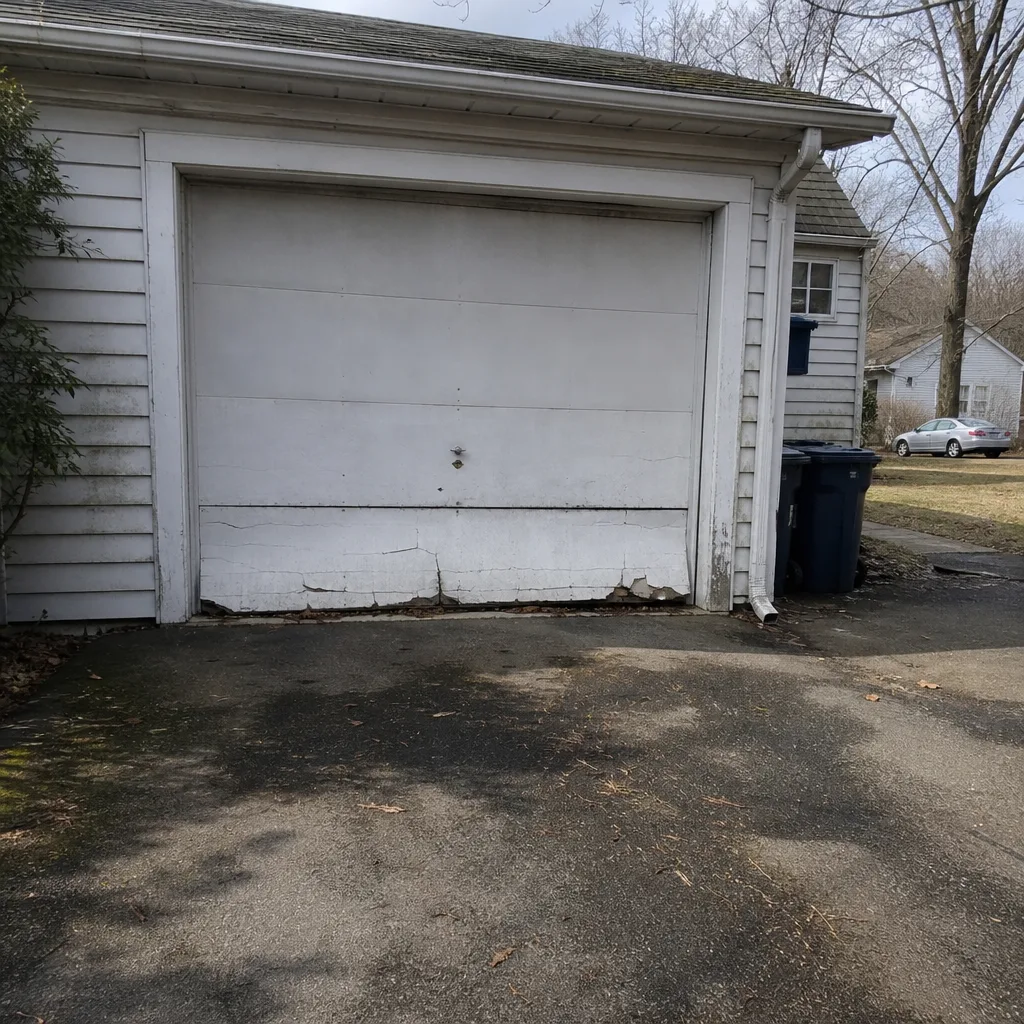 Before
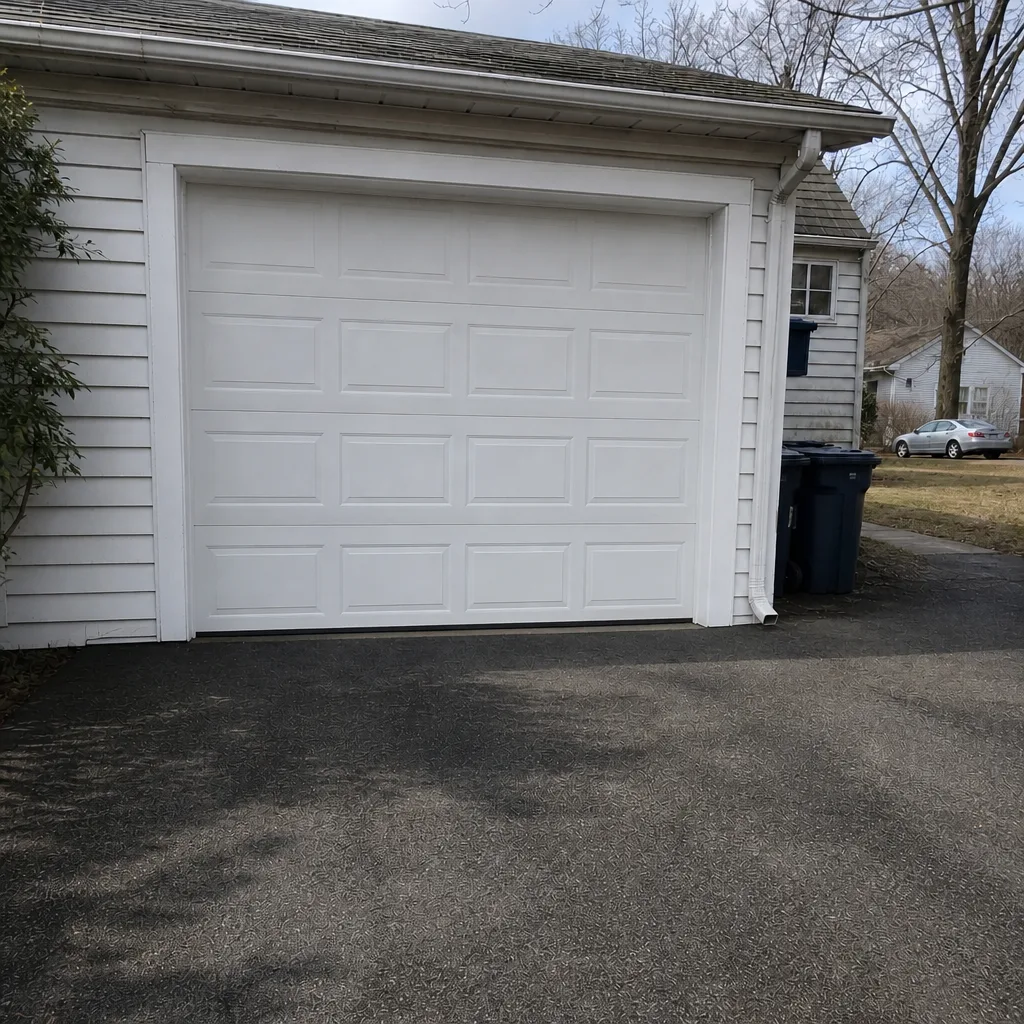 After
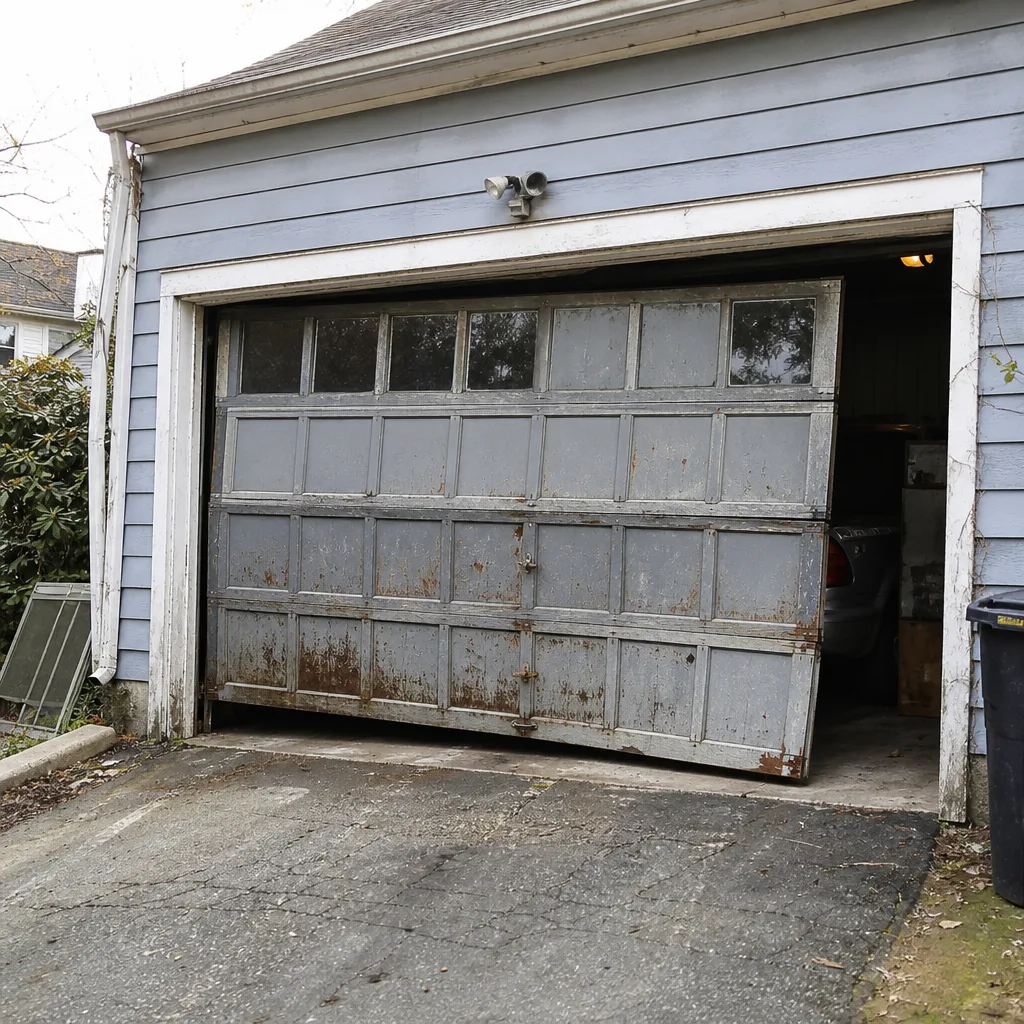 Before
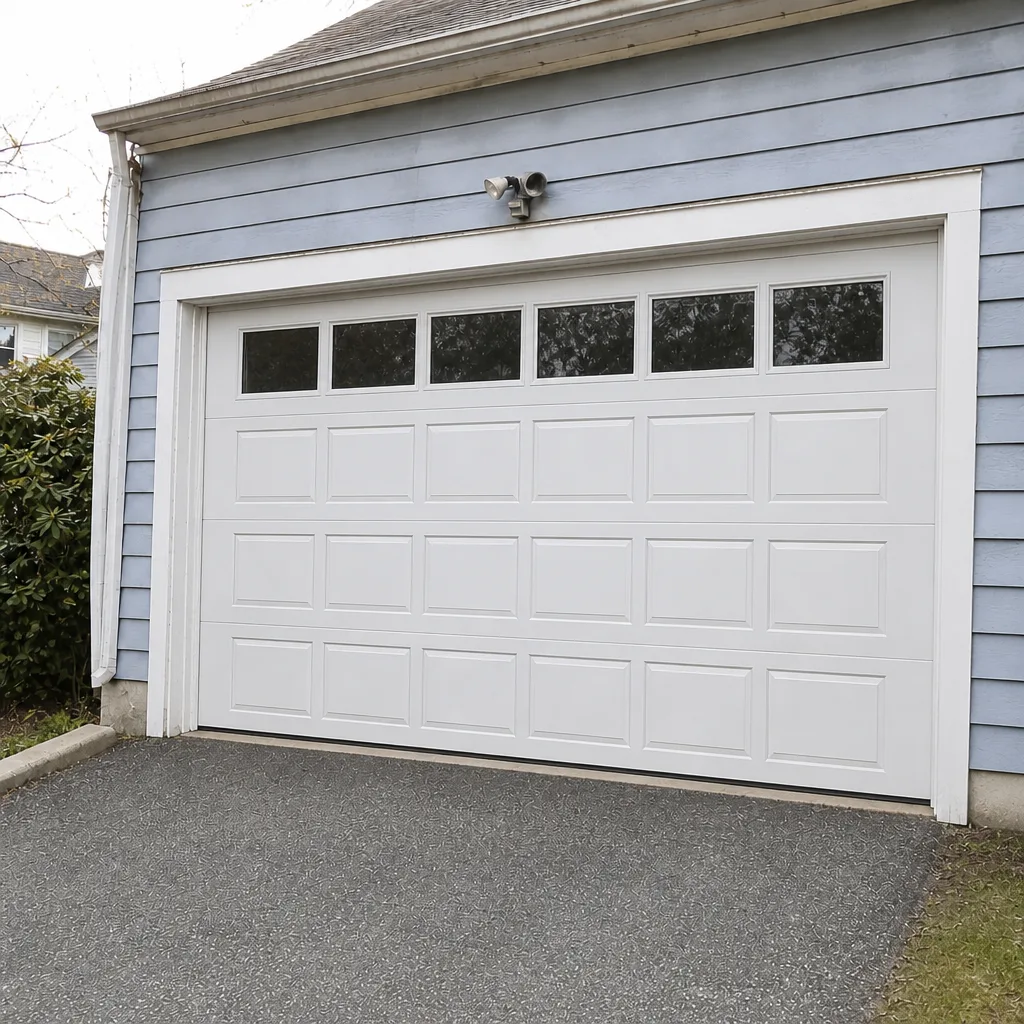 After
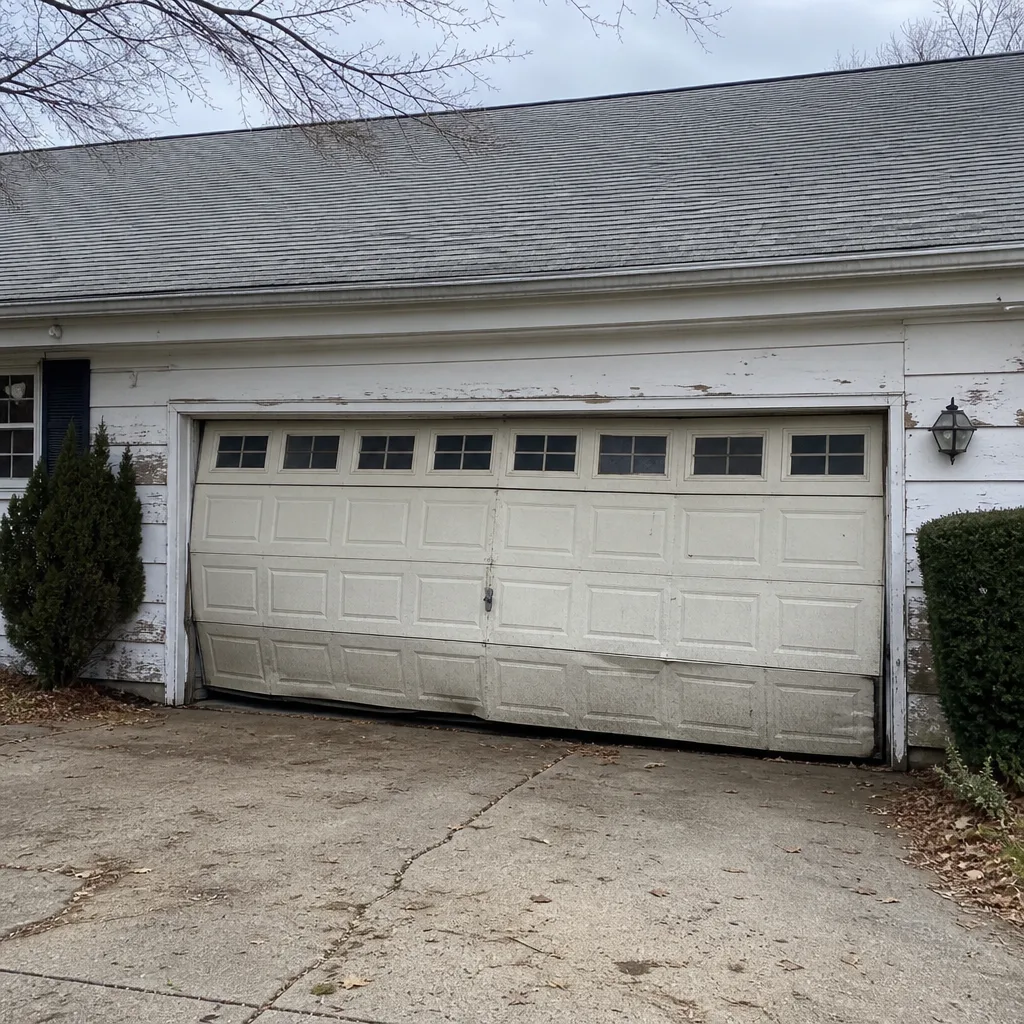 Before
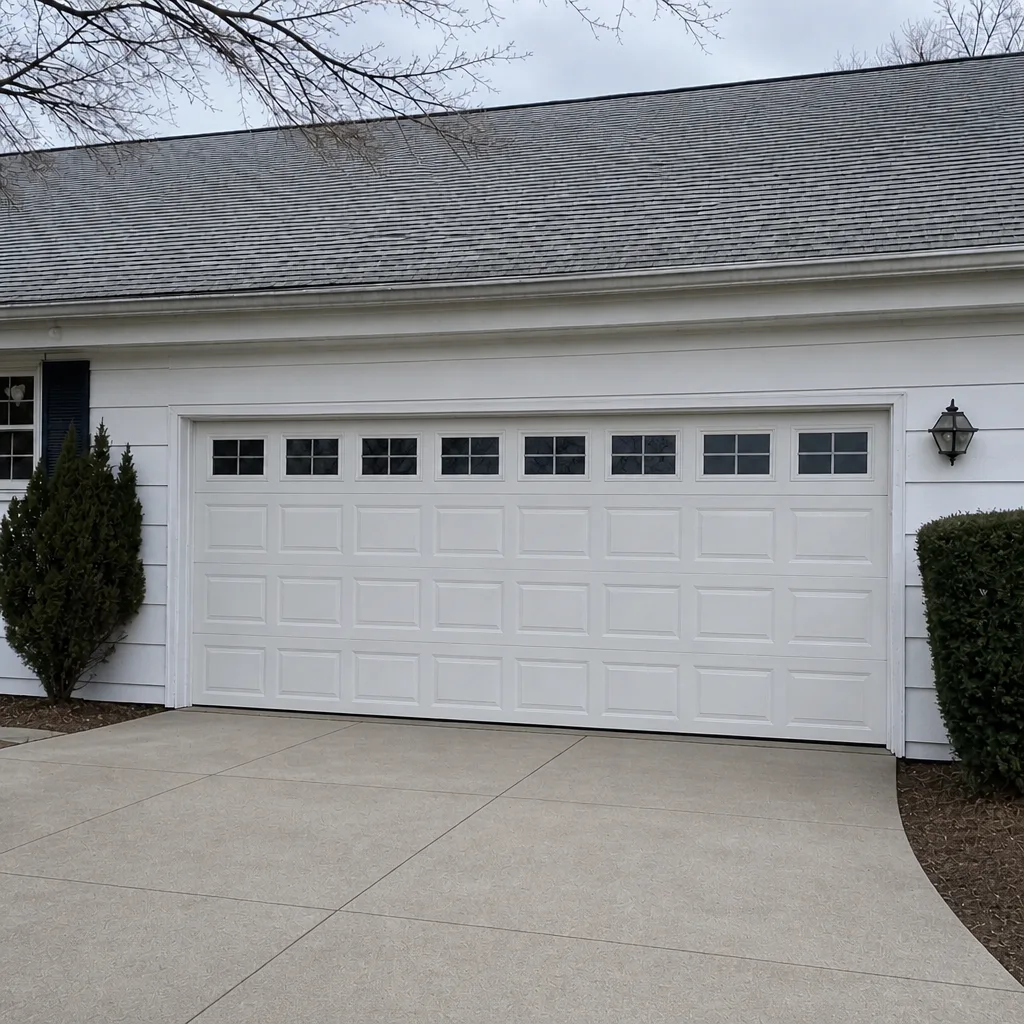 After
When to Call a Professional
Some garage door issues are safe to handle yourself: lubricating hardware, cleaning panels, replacing a remote battery, or resetting a sensor. Others need a specialist. Call a professional when the door won’t balance, when a spring or cable is broken or looks stretched, when the door comes off its track, when the opener runs but the door doesn’t move, or when anything about the door feels unsafe. These are the situations where a trained technician saves you both money and risk, and where the single-trade focus of a garage door specialist makes a real difference.
Bristol Garage Door Repair Pros offers free estimates in Bristol. Call (844) 693-1911. We answer 24/7. Fast dispatch from 7am to 7pm, Sunday through Friday. Our technicians have up to 12 years of experience, and the price is quoted and agreed before any work starts, so the written estimate is the price you pay.
Frequently Asked Questions
Twice a year, ideally: once in late fall before the first hard freeze and again after the spring thaw. Bristol’s freeze-thaw cycle and road salt wear components faster than in a mild climate, so a two-check schedule catches spring, seal, and track wear before it becomes a bigger repair.
It depends on the scope of the work and the local building department’s rules, so call Bristol’s building department with your address and project details before you order. Replacing like-for-like is often a lighter touch than changing the opening’s structure, but only the department can confirm what your project needs.
Bristol’s wide temperature swings fatigue spring steel faster than steady conditions do, so springs can fail sooner than their cycle rating suggests. Cables stretch and springs lose tension through repeated expansion and contraction. If springs are failing often, it’s worth having a technician check the door’s balance and the spring pair rather than replacing one at a time.
A 24- or 25-gauge steel door is the most reliable choice for most Bristol homes. Steel resists the humidity and temperature movement that warp wood, and it takes a factory finish that stands up to road salt. Composite is a good wood-look alternative, while real wood needs regular refinishing in the local humidity.
Yes, common repairs like a broken spring, a failed opener, or a misaligned track are often resolved the same day. Call (844) 693-1911. We answer 24/7, and a call outside dispatch hours is booked into the next opening, Sunday through Friday, 7am to 7pm.
No, the price is quoted and agreed before any work starts. The written estimate sets the final price, so you know what you’re paying before a technician begins. Estimates are free, and calling for one takes the guesswork out of the decision.
The Bottom Line
A garage door in Bristol is a system fighting a specific local climate, and the homeowners who get the most life out of theirs treat it that way. Choose a material that handles humidity and salt, insulate for the garage’s actual role, seal it properly, and check it before the freeze and after the thaw. Know your brand so the right parts are on hand, confirm permits and HOA rules before you order a new door, and never take on a spring repair yourself. Do those things and your door will serve you through Bristol’s seasons for years, with fewer surprises and lower costs along the way.
Written by the team at Bristol Garage Door Repair Pros.