
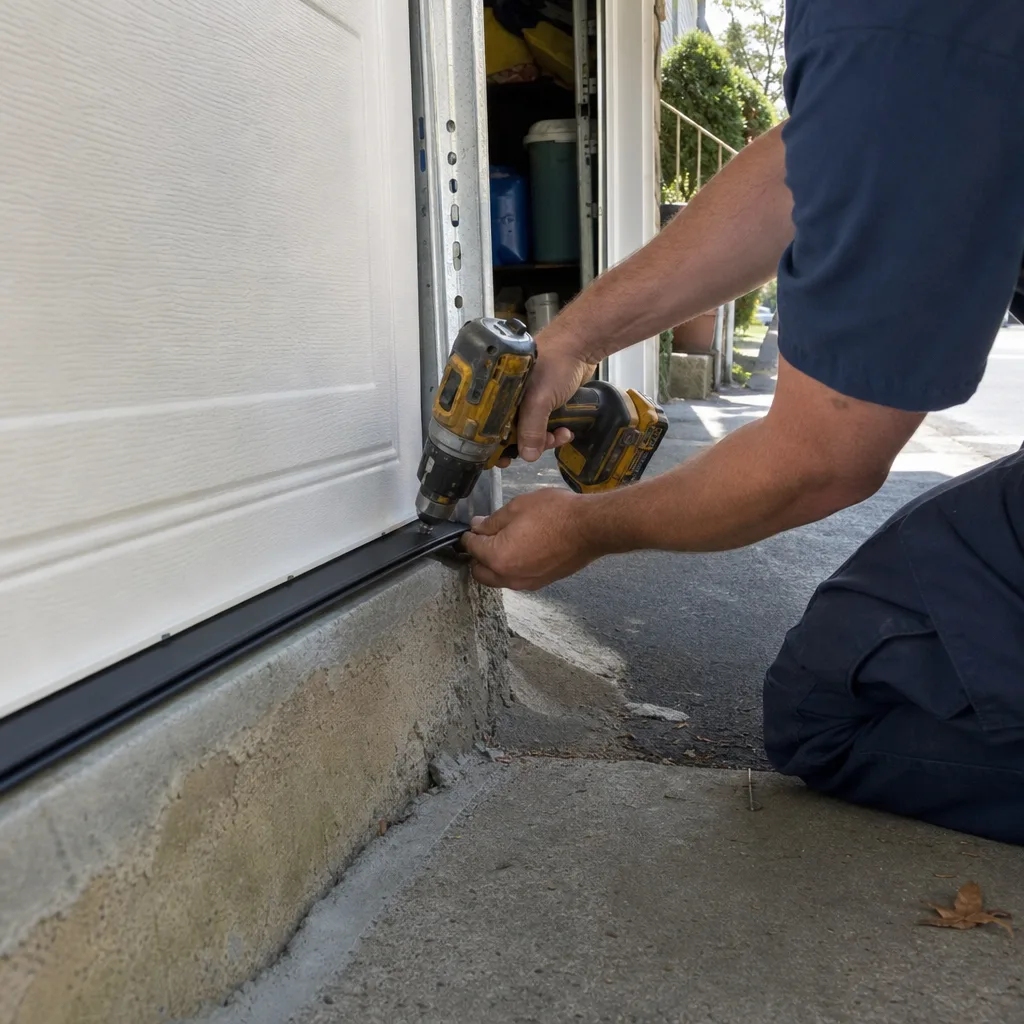
Last updated November 21, 2026
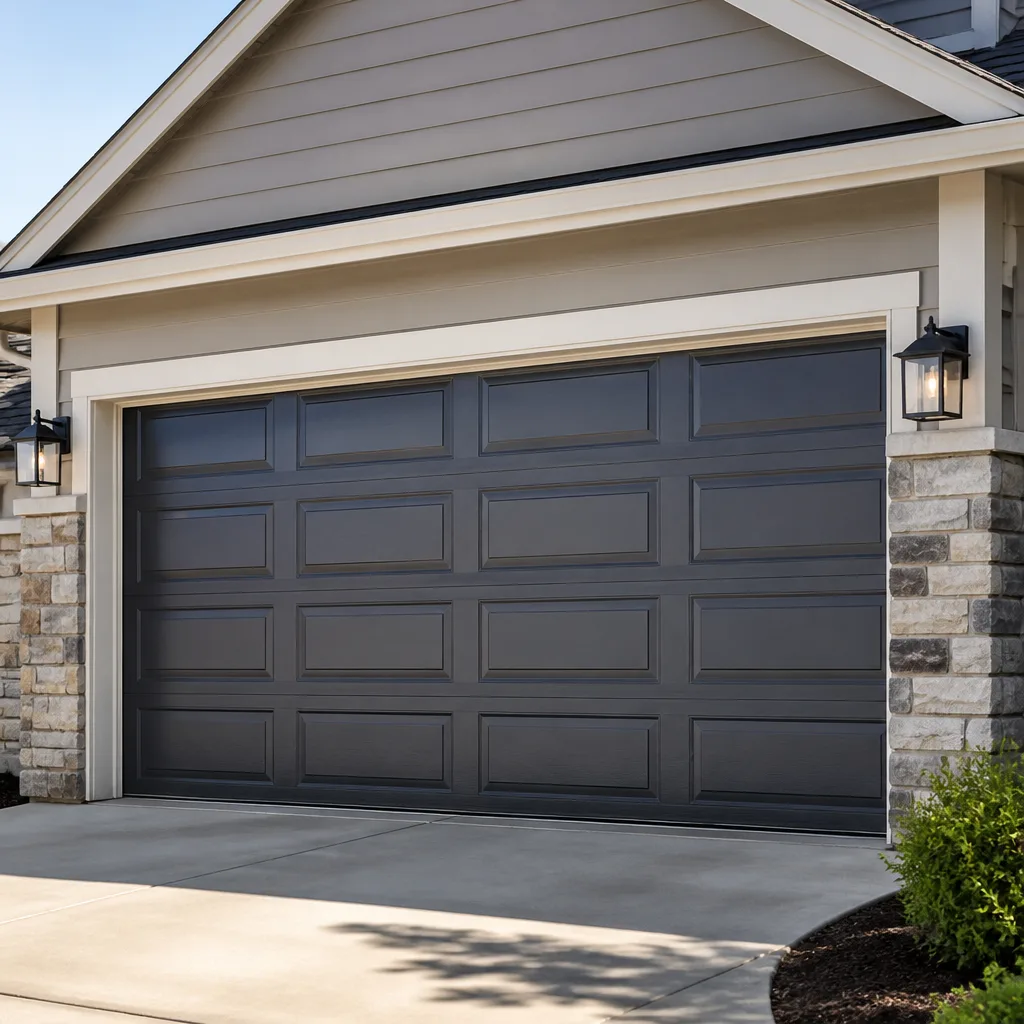 Raised-panel steel
 Carriage house
 Modern flush
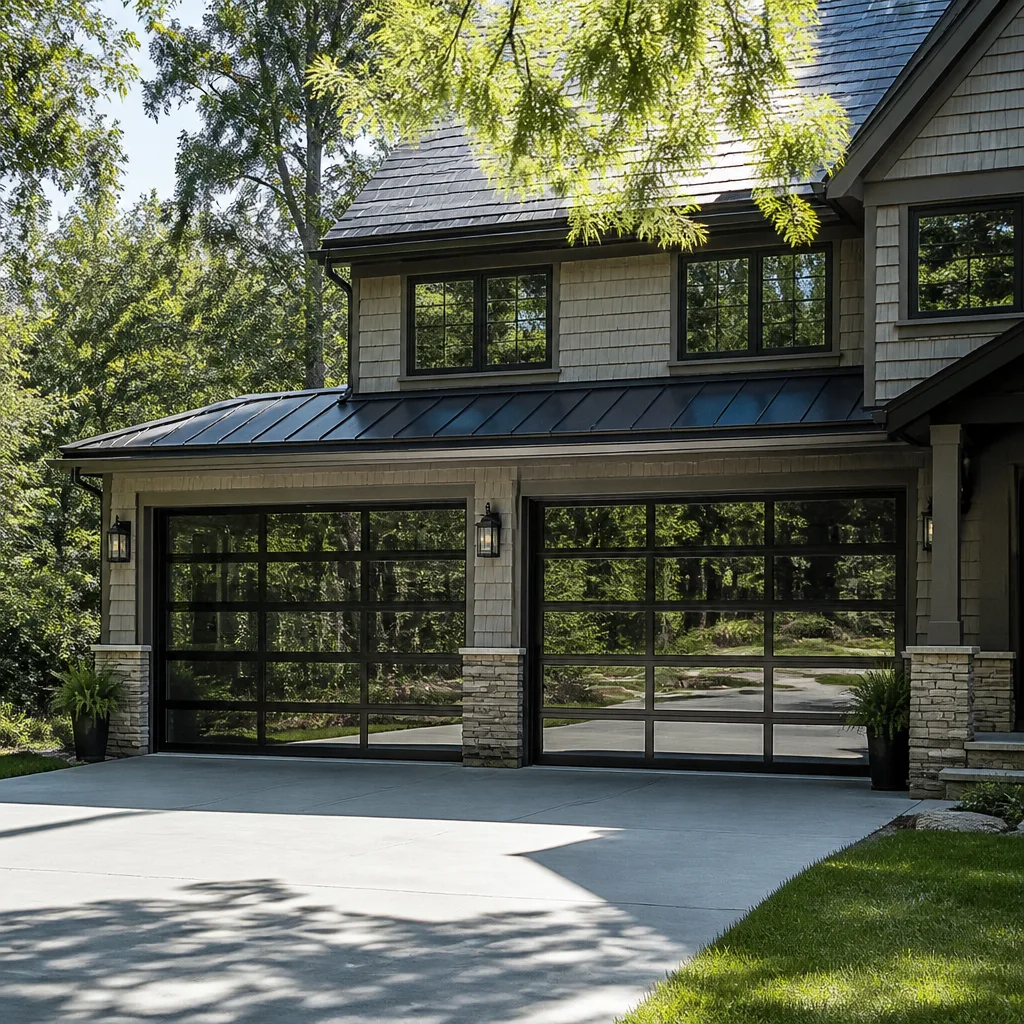 Full-view glass
 LiftMaster openers
 Chamberlain openers
Full 25-point door and opener safety check with every visit - springs, cables, rollers, tracks, and your LiftMaster or Chamberlain opener included
You get a price before we start. It does not change when the pro arrives.
Get your free estimateSeasonal Garage Door Care for Bristol: Year-Round Homeowner’s Guide
Most homeowners treat garage door maintenance like an annual chore – something to get to eventually, ideally before winter. That’s the wrong mental model, and it costs people real money. In our experience, Bristol’s four seasons don’t stress a garage door equally. Nearly all the damage happens in two narrow windows: the drop below freezing in late October, and the thaw-refreeze cycle that hits in March. Everything between those points is maintenance. Those two windows are where doors actually fail. This guide is organized around those risk windows rather than by calendar quarter, because that’s when the work matters. By the end, you’ll know exactly what to do in Bristol before the first hard frost, what to watch for as things warm up, and which tasks need doing every season versus every couple of years.
Quick Answer
Seasonal garage door care in Bristol comes down to two critical windows: late October, when temperatures drop below freezing and metal contracts sharply, and March, when freeze-thaw cycling causes water infiltration and cable corrosion. The most important annual task is a pre-freeze inspection of springs, seals and hardware before the first hard frost. Beyond those two windows, summer humidity care for wood and steel panels and seasonal opener limit adjustments complete the year. Spring replacement and cable work should always go to a trained technician – these are the most dangerous components in the system.
Styles & brands we work with
- Raised-panel steel
- Carriage house
- Modern flush
- Full-view glass
- LiftMaster openers
- Chamberlain openers
Table of Contents
- The October Window: What to Do Before the First Hard Frost
- Why March Is the Second Most Dangerous Month
- Summer Care in Bristol’s Humidity
- Adjusting Opener Travel Limits After Temperature Shifts
- The Two-Year vs. Annual Task Split
- Know Your System: Brand-Specific Care
- When to Call a Professional
- Frequently Asked Questions
The October Window: What to Do Before the First Hard Frost
Late October is the highest-risk period on Bristol’s garage door calendar. When temperatures first drop into the low 20s, metal contracts sharply and the pre-load on a torsion or extension spring shifts. A spring that’s been carrying tension all summer is suddenly under a different mechanical load – and that’s when it breaks, often while you’re simply backing out of the driveway. Doing nothing in October is the most expensive maintenance decision you can make all year.
What to check before the first hard frost:
- Springs (visual only): Look at the torsion spring above the door or the extension springs alongside the tracks. A visible gap in a torsion coil, or a stretched-out extension spring, means a break is likely. Do not touch, adjust or try to wind a spring yourself – a loaded spring can cause serious injury. This is a job for a trained technician.
- Bottom seal and side seals: Run your hand along the bottom seal (with the door closed) and feel for cracks, hardening or gaps. Cold makes a brittle seal crack further, letting snowmelt and road grit in through winter.
- Weatherstripping around the frame: Check for peeling or shrinkage. October is the right time to replace it, before the freeze locks everything in place.
- Hinges and rollers: Lubricate hinges, rollers and tracks with a garage-door-rated lubricant. Cold stiffens grease that’s too heavy, so a lighter application before winter beats a thick one.
- Track alignment: Look down each track by eye. Any obvious bend or gap should be addressed before ice and snow load the door.
- Balance test: Disconnect the opener and lift the door halfway by hand. It should hold roughly in place. If it drops or feels heavy, the springs are losing tension and need professional attention.
Bristol’s inland winters bring real freeze cycles, not just mild cold snaps. That’s why we treat October as the one month where skipping a check actually costs more than doing it. garage door spring repair calls spike in this window for a reason.
Why March Is the Second Most Dangerous Month
March looks gentle compared to October, but it’s where the winter damage shows up. Freeze-thaw cycling is the culprit: water gets into places it shouldn’t, freezes overnight, expands, then thaws during the day. That cycle repeats dozens of times over a few weeks.
Three specific failure modes hit Bristol doors in March:
- Water infiltration under the bottom seal. As the ground thaws, water pools near the threshold. A bottom seal that cracked in winter now lets that water under the door, where it freezes to the door bottom and can jam the panel against the threshold.
- Cable corrosion. Lift cables are steel. Moisture that gets in through small housing gaps and freeze-thaw cycles accelerates corrosion. A frayed or rusted cable is a serious safety issue and needs replacing by a technician – never a DIY job.
- Panel warping. Wood and some steel panels absorb moisture during the thaw, then dry unevenly. You may notice a panel that suddenly sits slightly off-level or doesn’t seat into the frame cleanly.
March is also when door height shifts, because the whole structure – threshold, frame, track mounting – moves a little with the ground. That change throws off opener travel limits (see below). Doors that cleared the floor in January often drag in March. It’s a symptom, not a new fault.
We suggest one specific March action: run a full dry-day inspection. Open and close the door slowly by hand and listen. Grinding, popping or a door that reverses on its own are all flags. If you see a cable that looks rusted or frayed, stop using the door and call a professional. The garage door repair work that most often gets missed in Bristol is exactly this March cable-and-seal check, because people assume spring problems are the only thing to worry about.
Summer Care in Bristol’s Humidity
Summer is the low-drama season for garage doors in Bristol – but it’s not a no-maintenance season. Bristol’s summer humidity is the real stress source, and it does different things depending on what your door is made of.
Wood panels: Wood absorbs moisture on humid days and releases it on dry ones. That cycle causes swelling at the joints and shrinkage at the frame. If you’ve noticed your wood door sticking in July and closing cleanly in October, that’s seasonal movement, not a hardware problem. The fix isn’t adjusting the door – it’s maintaining the finish. A quality exterior-grade sealant coat, reapplied on the schedule the manufacturer specifies, keeps moisture out at the source.
Steel panels (Clopay and Amarr both make common residential steel doors): Steel is dimensionally stable in humidity, but surface coatings aren’t immune. Moisture that sits on the panel face or collects along the bottom edge can start to break down the finish over time. Wipe down the bottom panel once a month in summer, especially near the threshold. If you see bubbling or rust at the bottom edge, that’s a coating failure to address before winter.
Openers and tracks: Humidity can cause light surface rust on unprotected track surfaces. A quick wipe and a reapplication of the manufacturer’s recommended lubricant keeps things smooth. Don’t use WD-40 on tracks – it attracts dust and gums up over time. Use a garage-door-specific lubricant.
Ventilation: If your garage is unfinished, summer humidity builds up inside. An occasional venting of the garage on a dry morning helps. It’s a small thing, but it extends the life of wood panels and keeps steel coatings in better shape going into fall.
Adjusting Opener Travel Limits After Temperature Shifts
One of the most common calls we get in Bristol isn’t a break at all – it’s a door that suddenly stops just short of the floor, or won’t fully open, after a cold snap or a warm spell. That’s almost always a travel limit issue, not a broken opener.
Travel limits are the settings on your opener that tell it how far to push the door down and how far to pull it up. When the door frame and threshold move slightly with the seasons, the door’s actual travel changes. The opener doesn’t know that. It keeps using the old limits, which either leave a small gap at the bottom (drag) or push too hard and reverse (fault detection triggering).
Here’s how travel limit adjustment works on most modern openers, including Chamberlain and Genie units:
- Locate the limit adjustment settings. On most current models, there’s an “up” limit and a “down” limit, either as screws or as digital settings in the control panel.
- Test the door’s current travel. Run it fully down and note whether it stops with a small gap or pushes hard and reverses.
- Adjust in small increments. On screw-type models, a quarter-turn is a good starting point. On digital models, change the setting by a small amount.
- Test after each change. Run the door fully open and fully closed. Repeat until the door seats firmly at the floor without reversing, and opens fully without topping out hard.
- Run the safety reverse test. Place a small object under the door and close it. The door should reverse on contact. If it doesn’t, the limit is too aggressive – back it off and test again.
If your door uses a belt drive with a smart controller (LiftMaster and Chamberlain both make these), the app often shows travel and force settings in the interface. Don’t override the force sensors just to stop the door dragging – that’s a safety setting, and a drag usually means a limit adjustment or a balance issue, not a force problem. If the door reverses and you can’t fix it with a limit adjustment, the springs may have lost tension and are the real cause. That’s a technician issue, not an opener issue. For more on the opener itself, see garage door opener repair.
The Two-Year vs. Annual Task Split
Not every garage door task needs doing every year. Separating the annual from the biennial cuts maintenance time without cutting reliability. Here’s how we think about it.
Annual tasks (every season or every year)
- October pre-freeze inspection – springs (visual only), seals, weatherstripping, hinges, rollers.
- March thaw inspection – cables, bottom seal, panel alignment, track condition.
- Summer bottom-panel wipe-down for steel doors and finish check for wood doors.
- Lubrication of hinges, rollers and tracks – more often in dusty or high-traffic conditions.
- Safety reverse test on the opener – quarterly is the bare minimum for peace of mind.
- Travel limit check after any significant temperature swing.
Biennial tasks (every two years)
- Full spring tension check by a trained technician. Springs lose tension gradually, and a professional balance test catches it before it becomes a failure.
- Cable inspection and replacement if any frays or corrosion are visible. Cables typically last longer than springs but not indefinitely.
- Full weatherstripping replacement on frames and sides. Even good weatherstripping hardens over two winters.
- Wood door refinishing – a fresh exterior coat every couple of years keeps moisture out.
- Roller replacement – nylon rollers usually get noisy or wobbly by the two-year mark.
The logic here is simple: springs and cables are the parts that fail catastrophically and carry real injury risk. That’s why they get a technician inspection every two years even if everything feels fine. The rest is something you can handle on your own inspection schedule.
Know Your System: Brand-Specific Care
One of the reasons garage door maintenance gets treated as one-size-fits-all is that most people don’t know what they own. That matters in Bristol, because different systems have different care needs.
Openers. LiftMaster and Chamberlain units (both make a large share of the residential market) use similar control interfaces and share most maintenance logic, but the smart-controller models log error codes that tell you exactly what’s wrong if you know where to look. Genie openers tend to have slightly different limit-adjustment mechanics and their own belt-tension check. Craftsman units, many of which are still in daily service, often need more patience on limit adjustments because of their age.
Doors. Clopay and Amarr both make common residential steel and composite doors, and both publish maintenance schedules. Following the manufacturer’s schedule is the safest baseline. Wayne Dalton and Raynor doors have their own panel and track construction quirks that are worth knowing before you start adjusting anything.
Our point isn’t to sell you on a brand – it’s to point out that a maintenance check done by someone unfamiliar with your door and opener is a guess. We work on LiftMaster, Chamberlain, Genie, Clopay, Amarr, Wayne Dalton, Craftsman and Raynor systems, which means we arrive knowing the system rather than learning it on your dime. If you’re not sure what you have, the model plate is usually on the opener housing and on the door’s bottom bracket.
Common Mistakes to Avoid
- Doing nothing in October because the door “still works fine.” Spring failure doesn’t announce itself. A spring that’s been carrying tension all summer can break the first time the temperature drops sharply. The check takes fifteen minutes – the failure can take hours to fix.
- Lubricating springs. Springs need to be left alone. A loaded spring is dangerous, and lubricant doesn’t help. The mechanisms to lubricate are hinges, rollers and track surfaces.
- Adjusting the force settings to stop a door dragging. The drag is almost always a travel limit or balance issue. Raising the force setting bypasses the safety system – the door will push through resistance instead of reversing, which defeats the whole point of the safety reverse function.
- Replacing one spring of a pair. Torsion and extension springs are matched pairs. Replacing one leaves the other under significantly uneven load, and it typically fails soon after. Replace both at the same time.
- Ignoring the March thaw check. Cable corrosion and bottom-seal water infiltration only show up in that window. Miss the check and you find out about the problem in the fall, when it’s far more disruptive.
- Using the wrong lubricant. Heavy grease gums up in cold weather. WD-40 attracts dust. Use a garage-door-specific lubricant, and apply it lightly.
- Treating a wood door and a steel door the same. Wood panels need finish maintenance at least every two years. Steel panels need finish inspections and bottom-edge moisture care. Different materials, different care.
When to Call a Professional
Most of this guide is homeowner-level work. These are the situations where you should stop and call:
- A spring is visibly broken (a gap in a torsion coil or a stretched extension spring).
- A cable is frayed, rusted or visibly misrouted.
- The door won’t stay level or feels unusually heavy when opened by hand.
- The door reverses unpredictably, or won’t fully close, after you’ve tried a limit adjustment.
- Any grinding, popping or scraping sound that wasn’t there before.
- You’re not sure of the door’s make and model and want maintenance done correctly.
For repairs, we answer 24/7 and run fast dispatch from 7am to 7pm, Sunday through Friday, closed Saturday. The price is quoted and agreed before any work starts. Bristol Garage Door Repair Pros offers free estimates in Bristol – call (844) 693-1911. Our technicians have up to 12 years of experience, and every job is priced per job by the written estimate.
Frequently Asked Questions
Late October is the single most important service window in Bristol, before temperatures drop below freezing and the load on the springs shifts. The second most important window is March, when freeze-thaw cycling and water infiltration cause a different set of problems. Between those windows, summer humidity care and seasonal opener limit checks cover the rest of the year. Call (844) 693-1911 for an exact quote on a seasonal service.
Springs should get a visual inspection every October before the first hard frost, and a full professional inspection every two years. The visual inspection can catch an obvious gap or stretch, but it can’t measure remaining tension – that takes a trained eye and a proper balance test. Call (844) 693-1911 to book a spring inspection.
Your door probably has a travel limit issue, not a broken opener. When temperatures drop, the door frame and threshold move slightly, and the opener’s travel limits don’t adjust automatically. The door stops just short of the floor or pushes hard and reverses. Most openers, including Chamberlain, Genie and LiftMaster units, let you adjust the limits in small increments. If a limit adjustment doesn’t fix it, the springs may have lost tension. Call (844) 693-1911 for a free estimate on a professional check.
Bristol’s summer humidity causes wood panels to swell at the joints and shrink at the frame, and it accelerates finish degradation on steel doors, especially at the bottom edge where moisture collects. The fix is maintaining the exterior finish on wood doors and wiping down the steel bottom panel regularly in summer. If you see bubbling or rust at the bottom edge, address it before winter.
No. Springs and cables are the most dangerous components in a garage door system. A loaded spring carries enough force that releasing it incorrectly can cause serious injury or worse. We strongly recommend a trained technician for spring and cable work. Call (844) 693-1911 – estimates are free.
Annual maintenance covers inspections, lubrication, seal checks and safety reverse tests – things you can do yourself. Biennial maintenance covers professional spring and cable inspection, full weatherstripping replacement and wood door refinishing. Both matter, but the biennial split is what catches the failures that DIY can’t detect. Call (844) 693-1911 for a free estimate on a full maintenance check.
The Bottom Line
Bristol’s garage door calendar has two hard deadlines: late October, before the first freeze, and March, during the thaw. Every other month is maintenance window filler. Spring replacement and cable work is real safety territory – it’s not a DIY task, and it’s not something to put off until it fails. Get the pre-freeze check done every October, do the thaw inspection every March, and hire a technician for spring and cable work. Whether your door needs a seasonal check, a repair or a full replacement, that’s the scope we cover. Call (844) 693-1911 for a free estimate. We answer 24/7. Fast dispatch from 7am to 7pm, Sunday through Friday, closed Saturday.
Curious about brands and systems? Start with Bristol Garage Door Repair Pros.
Written by the team at Bristol Garage Door Repair Pros.
See the difference
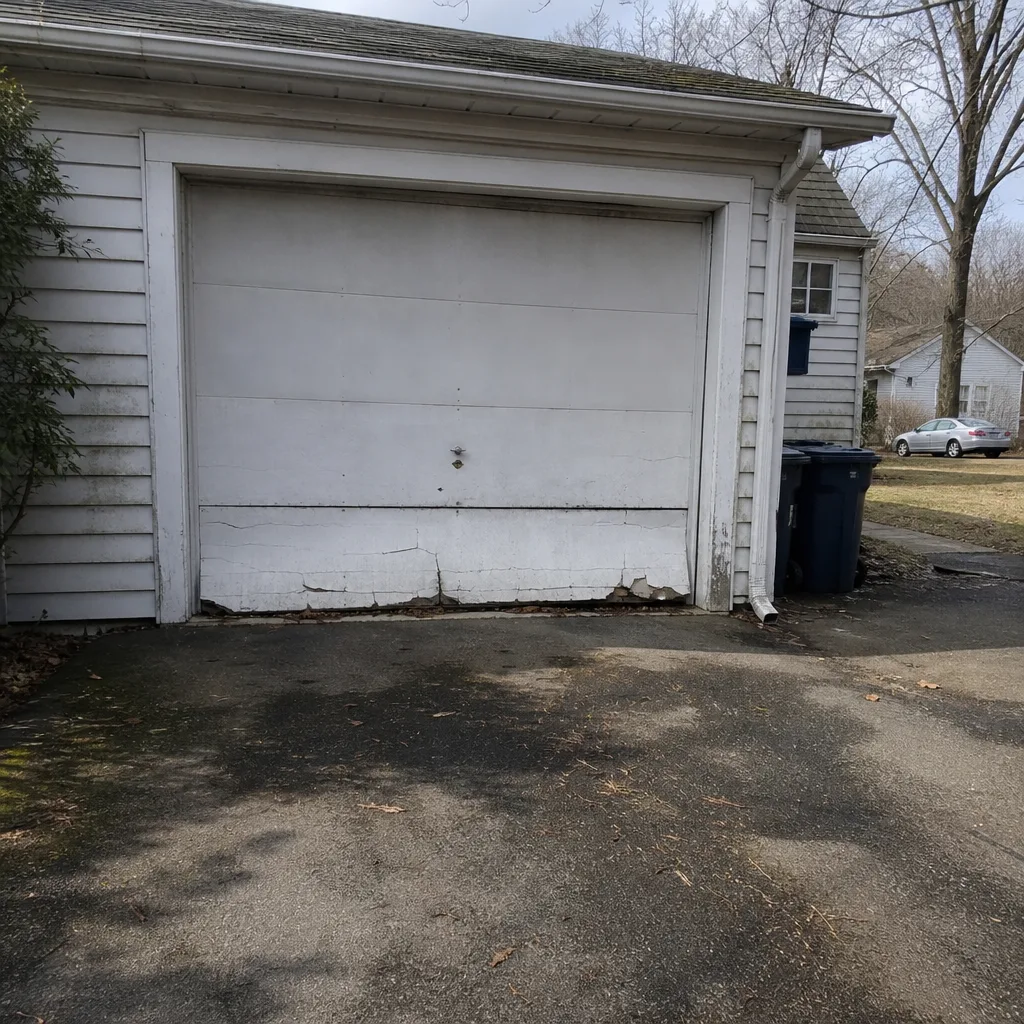 Before
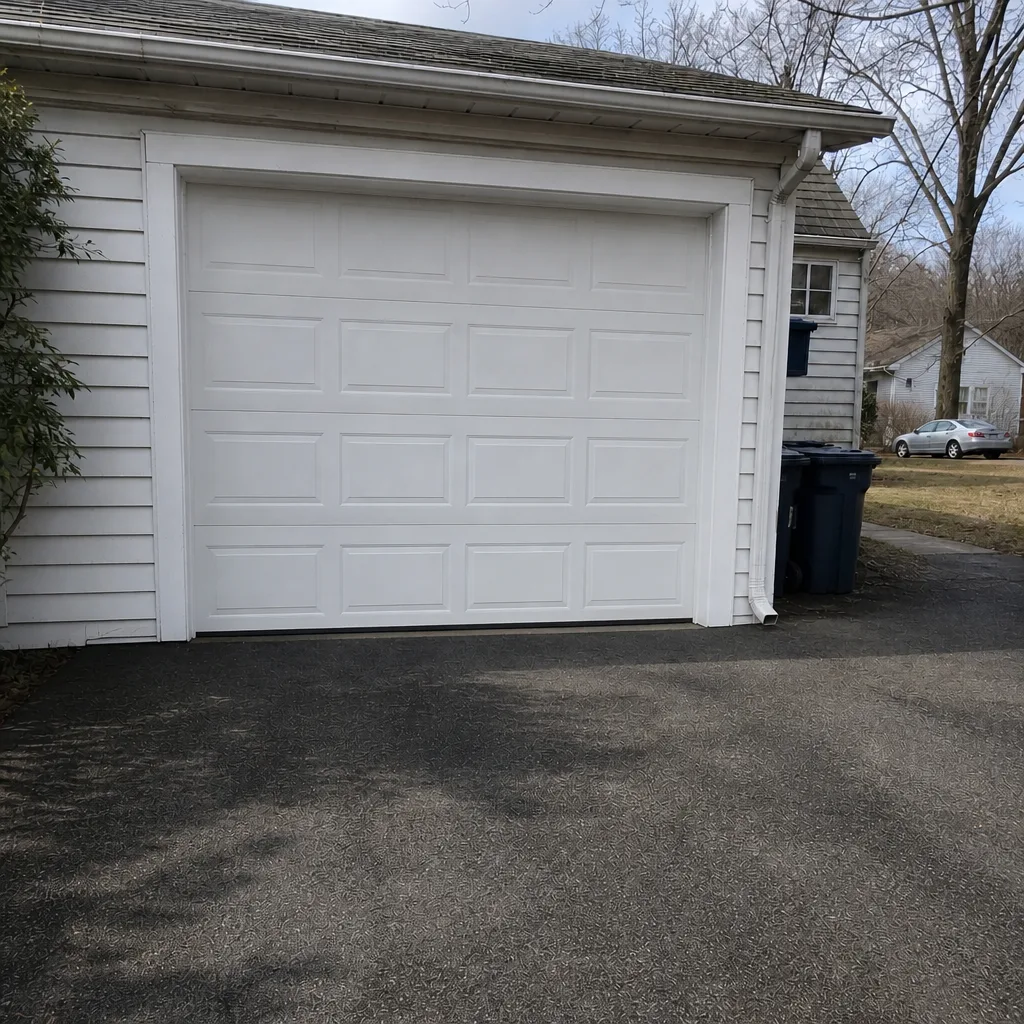 After
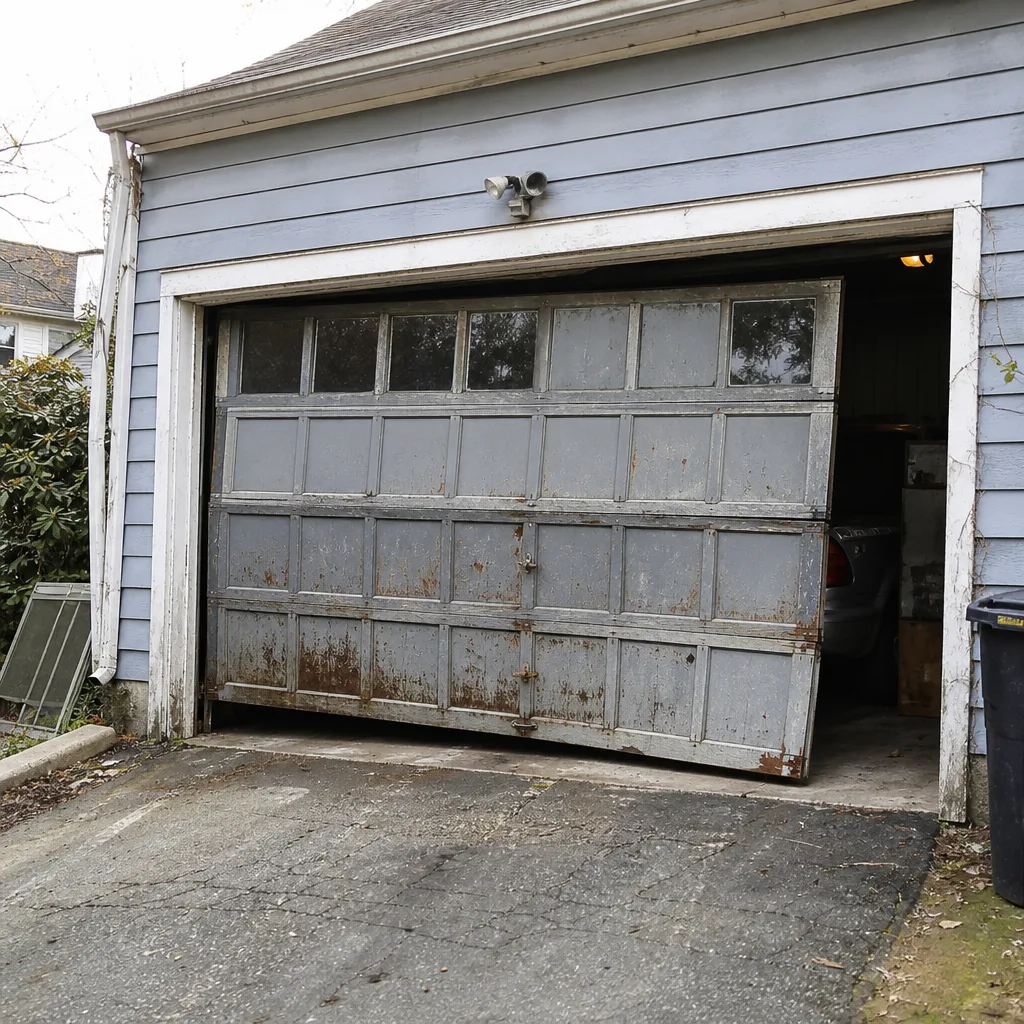 Before
 After
 Before
 After